
Key Points
- · Kim Jong Un
announced deployment of strategic assets to counter increasing U.S. military
forces in South Korea. - · He vowed
additional military measures to strengthen North Korea’s defence capabilities. - · Kim warned
enemies to be concerned about the evolving security environment. - · North Korea
is preparing for a major military parade on 10 October, marking 80 years of the
Workers’ Party of Korea. - · The parade
may showcase new weapons, including possibly the Hwasong-20 intercontinental
ballistic missile (ICBM). - · North Korea
has been increasing military cooperation with Russia and China. - · Kim
criticises U.S.-South Korean joint drills as nuclear weapons preparations. - · Kim
emphasised the need to hasten weapons development to maintain power balance. - · The increase
in nuclear material stockpiling in North Korea was reported by South Korea
recently.
What has Kim Jong Un pledged in
response to the U.S. military buildup?
As reported by Reuters and
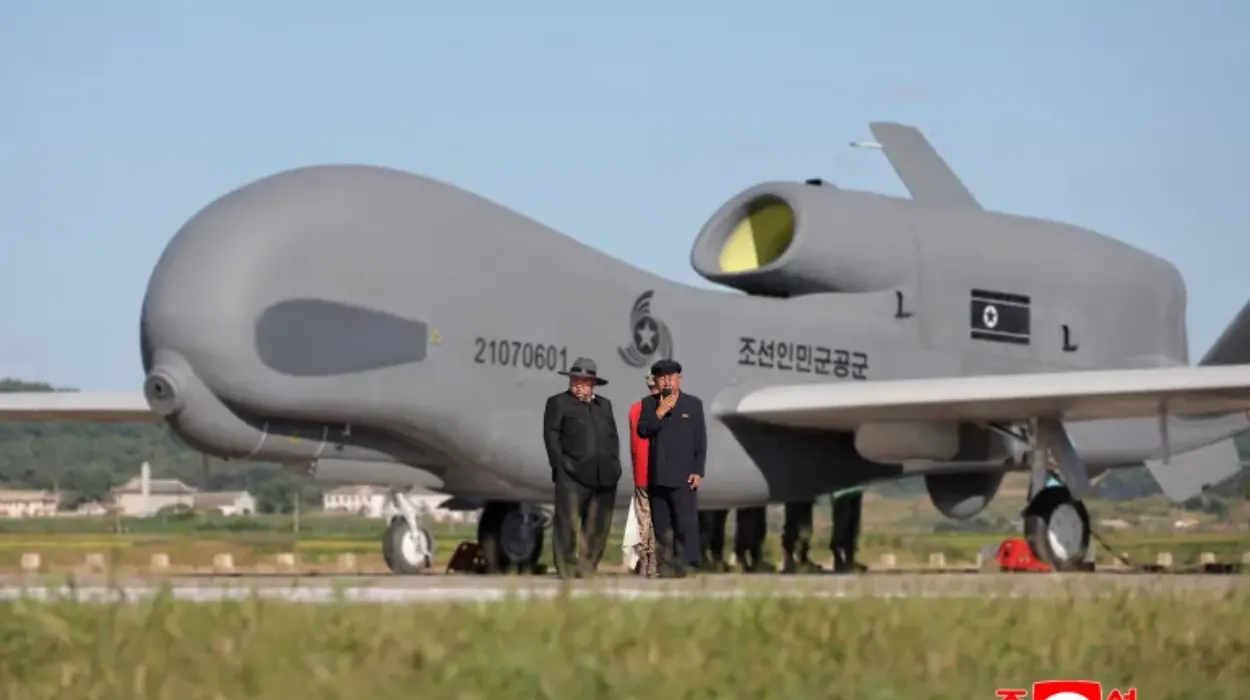
explained by Kim Jong Un during a military exhibition ahead of the 80th
anniversary of the ruling Workers’ Party of Korea, Kim stated that Pyongyang
has allocated “special assets” to key strategic targets in direct
proportion to the U.S. military buildup in South Korea. Kim warned, “I
believe our enemies should be concerned about the direction their security
environment is evolving.” He emphatically pledged that North Korea
“will undoubtedly develop additional military measures” to respond to
this threat but did not disclose specific details.
What military event is North Korea
preparing for, and what might it display?
According to South Korean
Yonhap News Agency and state media KCNA, North Korea is preparing a large-scale
military parade on 10 October to celebrate the 80th anniversary of the Workers’
Party of Korea. This parade is expected to showcase the latest military
hardware. Analysts suggest the possible unveiling of the Hwasong-20
intercontinental ballistic missile and even a potential test launch around the
date. South Korean military sources have observed movement of military vehicles
and equipment in preparation.
What is the significance of the rising
nuclear material stockpile reported recently?
South Korean reports indicate
that North Korea has amassed substantial amounts of highly enriched,
weapons-grade uranium, marking a significant increase in its nuclear material
stockpile. This development underscores Pyongyang’s intent to fortify its
nuclear capabilities amid escalating tensions in the region (Firstpost; Al
Jazeera).
How does Kim Jong Un describe the
U.S.-South Korea joint military exercises?
According to North Korea’s
official Rodong Sinmun as reported by NHK World, Kim criticized the joint
military drills conducted by the United States and South Korea, characterizing
them as rehearsals for the potential use of nuclear weapons. He labelled the
U.S. and South Korea as primary security threats to North Korea and
neighbouring countries, justifying his country’s accelerated weapons
development.
What recent diplomatic and military
alliances has North Korea enhanced?
Multiple sources note that
North Korea has strengthened military cooperation with Russia, including
reportedly supplying troops and artillery to support Vladimir Putin’s military
actions in Ukraine. Kim’s recent visit to Beijing for a military parade
commemorating the 80th anniversary of the end of World War II alongside Chinese
President Xi Jinping and Russian President Vladimir Putin signals deepening
ties with these allies.
What are Kim’s views on maintaining
North Korean security amid rising threats?
In statements covered by
multiple outlets, Kim Jong Un emphasized that only a “nuclear counteraction”
could guarantee North Korea’s security. He has directed top officials to
enhance the nation’s “nuclear shield and sword,” speeding up weapons
development to counterbalance the increasing U.S. presence and maintain power
equilibrium in the region.
What is the broader geopolitical
context behind these developments?
Despite diplomatic overtures
from South Korea’s new administration under President Lee Jae-myung, who
pledged a more cautious approach toward Pyongyang, Kim has maintained a
hardline stance, escalating military rhetoric and initiatives. The buildup of
U.S. forces in South Korea, ongoing joint exercises, and global strategic
alignments have contributed to heightened tensions on the Korean Peninsula.