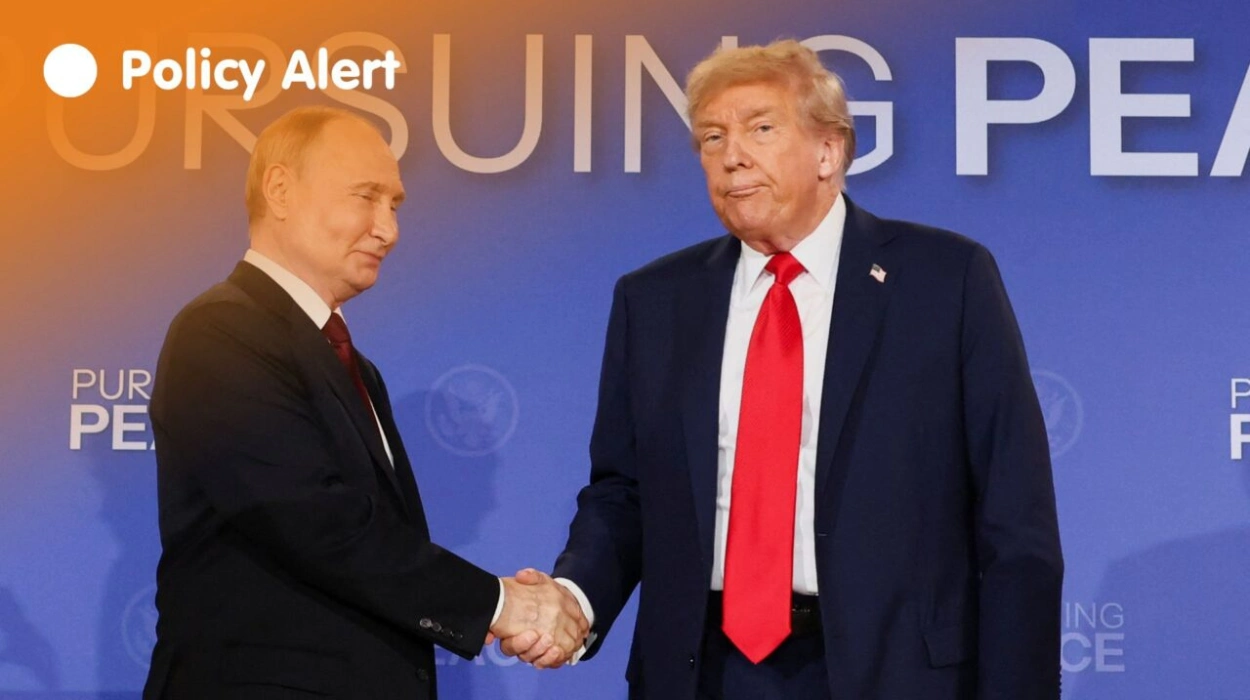

The Alaska Summit on August 15, 2025, between U.S. President
Donald Trump and Russian President Vladimir Putin marked a significant moment
in international diplomacy, yet it underscored the deep complexities and
challenges facing Europe and the broader global order. Held at Joint Base
Elmendorf-Richardson in Anchorage, Alaska, this highly anticipated meeting
initially raised hopes for progress on the Russo-Ukrainian War but ultimately
produced no breakthroughs, leaving many observers pondering the broader lessons
for Europe caught in the geopolitical crossfire.
The summit was notable for being the first time a Russian
president visited U.S. soil since the 2022 invasion of Ukraine, alongside
President Trump’s return to the world stage as the sitting U.S. president
following his reelection in 2024. Yet, despite the grandeur of the occasion —
highlighted by the red carpet welcome and an impressive flyover of F-22 Raptors
and B-2 bombers — the outcome left little to celebrate.
A Grand Entrance but No Grand Agreement
President Trump publicly welcomed President Putin with
warmth, applauding and shaking hands on the Alaska tarmac, gestures that
signaled a thaw in relations and a diplomatic gesture to an often-isolated
Russian leader. Putin’s attendance was a symbolic victory, signaling a partial
reintegration into global dialogue despite an ongoing International Criminal
Court (ICC) arrest warrant for alleged war crimes. The summit included their
top aides, emphasizing the weight of the discussions and the desire for a
comprehensive approach.
Nevertheless, the talks yielded no
ceasefire agreement or concrete pathway toward peace in Ukraine. Trump
intimated that the responsibility now lies with Ukraine to cede territory to
end the conflict, a stance that drew backlash from many European allies who
view such concessions as politically and morally unacceptable. Trump’s
assertion that “there’s no deal until there’s a deal” underscored the impasse
and the ambiguity surrounding future negotiations.
European Concerns and Lessons Learned
European leaders and analysts largely viewed the summit with
skepticism. Finland’s Foreign Minister Elina Valtonen described the event as a
“victory for Putin,” noting Moscow’s refusal to compromise or even meet
Ukraine’s President Zelenskyy. The summit highlighted deep rifts between
Western allies over how to respond to Russia’s aggression, with Europe wary of
any détente that might embolden Putin or undermine Ukrainian sovereignty.
Valtonen remarked,
“The Russians weren’t willing to
sacrifice anything of their goals. They aren’t even willing to meet with
President Zelenskyy.”
The summit’s failure to produce progress alarmed many
European capitals already grappling with the multifaceted security, economic,
and humanitarian fallout from the war.
Moreover, the summit illuminated the persistently divergent
priorities and approaches within the Western alliance. While Trump offered a
relatively conciliatory approach toward Russia, many European leaders
emphasized the importance of maintaining a united front of sanctions, military
assistance to Ukraine, and diplomatic isolation of Moscow to prevent further
escalations.
The Strategic Implications for Europe
The Alaska summit exposed Europe’s precarious position amid
great power competition. While European nations continue to bear the brunt of
the Ukraine conflict through direct security threats and refugee flows, the
summit’s outcome indicated a potential reconfiguration of U.S. engagement in
Europe’s security matters. Trump’s openness to negotiations that could involve
territorial concessions was seen by many as undermining the firm stance of
European allies.
The summit also cast a spotlight on the fragile and
complicated dynamics that Europe must navigate between relying on U.S. military
and diplomatic support and managing relations with Russia. The visit itself —
held on a U.S. military base rather than a civilian venue — symbolized the
continuing militarization of diplomacy in the region.
Russia’s Unyielding Stance
For Russia, the summit was unequivocally a display of
resilience and strategic patience. Putin used the occasion to reinforce
Moscow’s demands and reject Western narratives about the conflict, staying firm
on retaining control over contested territories in Ukraine. Russian officials
also suggested the summit could lead to nuclear arms control discussions,
including the renewal of the New START treaty, although no concrete agreements
materialized.
Putin’s presence on American soil was itself a message:
despite Western sanctions and isolation attempts, Russia remains a key player
on the global stage. The summit’s proceedings, including Putin’s choice to ride
in Trump’s limousine, were interpreted by some commentators as signaling a symbolic
partnership or at least a mutual respect between the two leaders.
The Human Cost and Geopolitical Realities
While diplomatic pageantry dominated media coverage, the
summit’s failure underscored the harsh realities on the ground, where millions
of Ukrainians continue to face displacement, destruction, and loss of life. The
ongoing conflict fuels Europe’s energy insecurity, economic turbulence, and
persistent threat of spillover violence.
In this context, the summit’s lack of concrete results
extended beyond bilateral U.S.-Russia relations; it imposed a cautionary tale
for Europe on the limits of summit diplomacy without genuine commitment to
conflict resolution. European policymakers face increasing pressure to bolster
defense capabilities, deepen energy independence, and maintain humanitarian
support to Ukraine despite uncertain diplomatic horizons.
Looking Ahead: Europe’s Strategic Options
The lessons from Alaska signal that Europe must continue to
reinforce its strategic autonomy while relying on transatlantic ties.
Strengthening NATO, investing in defense technology, and supporting Ukraine are
seen as critical steps while preparing for a diplomatic long game with Russia.
Finnish Foreign Minister Valtonen aptly summarized these
imperatives by stating,
“An end to Russia’s full-scale invasion of Ukraine
looks very unlikely now,”
underscoring the necessity for Europe to brace for
prolonged conflict and complex geopolitical challenges.
As the world waits to see if further trilateral talks
between Trump, Putin, and Zelenskyy might occur, the Alaska summit remains a
stark reminder of the difficulties in bridging divides between Moscow and the
West — a reality that European countries must continuously factor into their
foreign and security policies.