
Summary
- Yemen’s
Houthis will target U.S. oil majors Exxon Mobil, Chevron. - Decision
ignores earlier truce with the Trump administration. - Houthis
sanctioned 13 US companies, 9 executives, 2 vessels.
Thirteen American corporations, nine executives, and two
vessels were sanctioned by the Sanaa-based Humanitarian Operations Coordination
Center (HOCC), which is affiliated with the Houthi military and serves as a
liaison between Houthi forces and commercial shipping operators.
On its website, HOCC stated that entities assigned by the
Houthis “shall be dealt with in accordance with the principle of
confrontation,” outlining its plans for dealing with those who are thought
to be subject to their sanctions.
The announcement serves as a warning that the businesses
which also include Diamond S Shipping and ConocoPhillips are considered hostile
entities that are vulnerable to assault.
Requests for comment were not immediately answered
by the companies.
In what they claim is sympathy with Palestinians after
Israel’s war on Gaza, the Houthis have undertaken multiple attacks on ships in
the Red Sea since 2023 that they believe are associated with Israel.
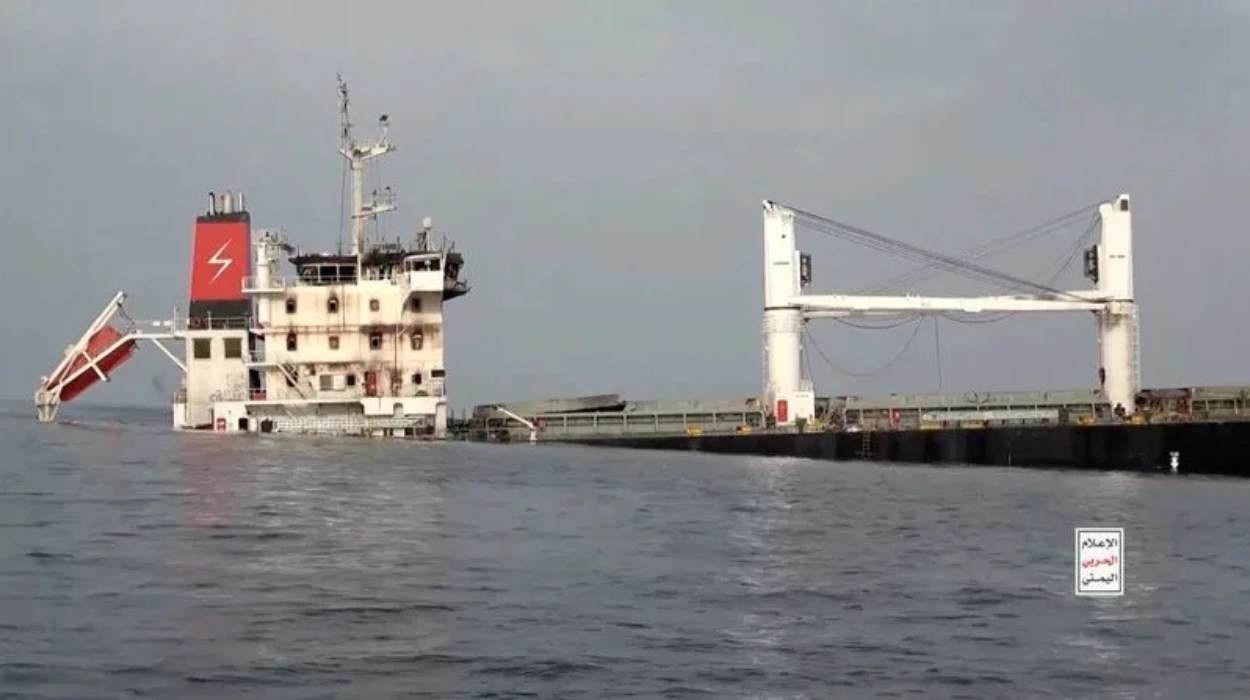
They assaulted a Dutch cargo ship in the Gulf of Aden this
week, leaving it adrift and burning while injuring two crew members.
What legal options do oil companies have against attacks?
The United Nations Convention on the Law of the Sea (UNCLOS)
affords coastal states limited power to defend oil installations located
offshore, as it permits coastal states to create safety zones of up to 500m
around their oil installations located in their Exclusive Economic Zones
(EEZs).
The 1988 Suppression of Unlawful Acts (SUA) Convention and
Protocol specifically target unlawful and violent acts against offshore
petroleum installations, requiring states that are a party to the SUA
Convention and Protocol (Contracting States) to criminalize the offense,
prosecute, and cooperate in enforcement against the perpetrators.
Nonetheless, the approach of enforcement action
(interdiction or the arrest of offenders) against offenders on foreign flagged
ships that have committed the attack is cumbersome and constrained by
jurisdictional and sovereign considerations.