
Summary
- The
judge addressed political pressure in the Charlie Kirk shooting case
hearing. - Suspect
Tyler Robinson appeared Monday. - The
legal team seeks time to review evidence. - Robinson
was charged with aggravated murder.
The 22-year-old Tyler Robinson is accused of shooting the
right-wing youth activist on September 10 while he was speaking on a college
campus in Orem, Utah. Shortly after being struck once in the neck by a bullet
fired from a sniper’s position using a powerful rifle, Kirk, 31, was declared
dead.
Robinson was virtually present in court on Monday, when his
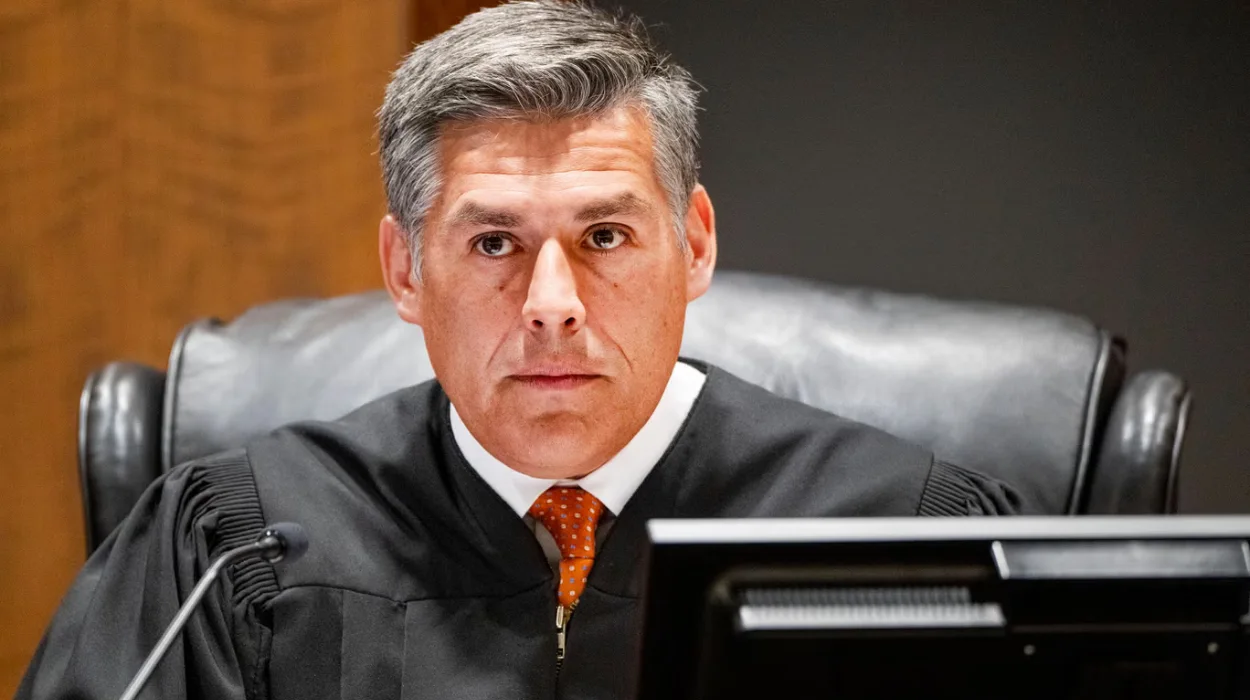
recently hired legal team requested further time from Judge Tony Graf to
consider the substantial quantity of material before determining whether to
request a preliminary hearing. Robinson is anticipated to attend in person at
the next hearing, which the judge scheduled for October 30.
Graf promised not to allow any outside forces to influence
him in the case before the brief session came to an end.
“Let me be clear, I will not put my finger on the scale
of justice,”
Graf said. He later added:
“Counsel, regardless of who is
watching, whether it is the nation or a single individual, we must fulfill our
roles with integrity, civility, and diligence.”
Following the passing of Kirk, a well-known person in the
MAGA political arena, there has been a flood of condolences. Both President
Donald Trump and Vice President JD Vance have accused
left-wing individuals of being responsible for the increase in political
violence in the United States.
Ahead of high-profile criminal prosecutions, several judges
have criticized remarks that can be interpreted as biased.
Last week, a federal judge in New York issued a warning to
Department of Justice officials that if they support Trump’s allegation that
Luigi Mangione killed UnitedHealthcare CEO Brian Thompson before his trial, the
prosecution may face penalties or the accused may receive relief.
The defense and prosecution agreed that the evidence is
“voluminous” during Robinson’s hearing on Monday. At the request of
his defense team, Robinson appeared on audio from jail during the hearing
rather than in person.
The 22-year-old has not entered a plea and has been
officially charged with aggravated murder. The prosecution intends to pursue
Robinson’s execution.
Robinson’s relatives persuaded him to give himself in when
he eventually showed up at his parents’ home in southwest Utah, more than three
hours away.
Since then, prosecutors have made public DNA evidence and
text exchanges they claim link Robinson to the murder.
People who knew the accused have called him
“quiet,” although family members told authorities that he had grown
“more political” in recent years.
The shooting occurred at Utah Valley University, which he
did not attend.
Robinson seemed to accept responsibility for the shooting in
a few texts he wrote to his roommate and purported romantic partner. According
to officials, Robinson had the chance to murder one of the most prominent
conservative voices in the country, “and I’m going to take it,”
according to a note he left for his accomplice.
Additionally, Robinson texted his partner, saying, “I
had enough of his hatred.” Additionally, he instructed his companion to
stop talking to the media and erase the communications.
Although Republican party members and Utah state leaders
have denounced Kirk’s murder as “politically motivated,” it is still
unclear if Robinson’s intentions were overtly political.
Since his passing, well-known Republicans have been covering
for Kirk at a number of college functions he had scheduled.
How have Trump administration remarks influenced other
high-profile cases?
In certain situations, the individuals that are suspects
have cited or invoked support for Trump or his rhetoric as a motive, including
for criminal acts such as violent threats or hate crimes. Official court
documents also show a connection between the president’s statements and
offenders’ beliefs or intent. For instance, suspects in crimes against minority
communities have quoted Trump’s campaign or administration rhetoric relating to
their justification for the attack.
The rhetoric of the administration has fostered political
polarization, which has complicated the legal process by directing more media
scrutiny and political attention from elected officials to the prosecution and
judges.
The increased political attention has occasionally heightened
concerns of impartiality and judicial independence.