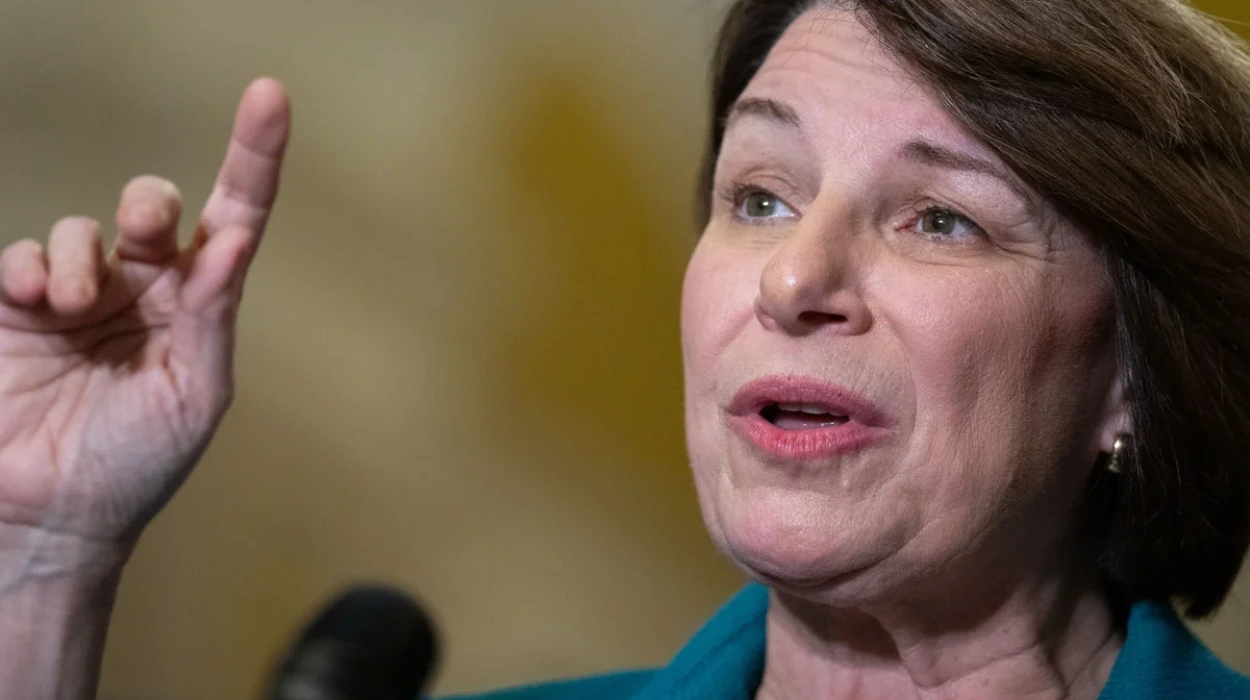

The United States
is witnessing a mounting concern over the stability of its constitutional
framework, as prominent figures in the Senate voice warnings about an impending
constitutional crisis. Senator Amy Klobuchar (D-Minn.) has emerged as a pivotal
commentator on this warning, highlighting the increasing pressure on the
judicial system and the broader democratic institutions as they face
unprecedented tests.
The Rising
Alarm: Klobuchar’s Warning
Senator Amy Klobuchar has cautioned that the nation is
progressively nearing what she terms a constitutional crisis, a situation where
foundational democratic norms and constitutional governance face severe
challenges or breakdown. Speaking in a high-profile interview on a major news
platform, she acknowledged that while the crisis is not yet fully realized, the
warning signs are increasingly evident.
Klobuchar’s concerns focus on the current political climate marked
by relentless testing of constitutional limits, particularly by former
President Donald Trump and his administration’s confrontations with the
judiciary. She outlined how repeated challenges to judicial authority,
disregard for legal rulings, and attempts to sway institutional checks and
balances create an environment where democratic institutions could be
compromised.
However, Klobuchar offers a cautious note of optimism, emphasizing
that the US is not yet fully engulfed in crisis because courts have largely
upheld their duties and a growing, albeit limited, bipartisan pushback is
emerging within Congress and among constituents.
Judicial
Resilience and the Rule of Law
A cornerstone of the warning arises from the judiciary’s central
role in maintaining constitutional governance. Klobuchar’s insistence that
judges are “standing up and doing their job” reflects the judiciary’s critical
function as an independent arbiter amid political pressures.
The judicial system has confronted a series of high-stakes cases
challenging executive actions, policies, and procedural norms. Courts have
issued rulings that preserve constitutional boundaries and check executive
overreach, demonstrating the fundamental separation of powers designed to
prevent authoritarianism and preserve rule of law principles.
This judicial resilience serves as a bulwark against the
dissolution of democratic governance, with courts providing a legal framework
for resolving political disputes peacefully and upholding civil liberties.
Congressional
Dynamics and Bipartisan Challenges
Klobuchar points to an emerging, although fragile, bipartisan
willingness to act against executive policies that strain constitutional norms.
She highlights a recent Senate resolution, supported by a small but significant
group of Republican senators, aiming to rescind controversial tariffs imposed
on Canadian imports by the prior administration.
While this resolution is largely symbolic and lacks binding
legislative power, its passage signals cracks within political alignments and
demonstrates some legislators’ readiness to counterbalance executive assertions
of power. This development is encouraging from Klobuchar’s perspective,
providing hope that elected representatives still prioritize national interest
and constitutional stability over partisan allegiance.
Such bipartisan cooperation, however limited, is vital to
maintaining democratic checks and balances. Klobuchar underscores the need for
“four in the House, four in the Senate” willing to uphold constitutional
principles to anchor democracy during turbulent times.
Public Sentiment
and Constituent Pressures
Another critical dimension Klobuchar identifies is public reaction
and constituent attitudes, which shape political accountability and legitimacy.
During a recent rural tour, she heard firsthand concerns from voters, including
those who originally supported former President Trump but now express
dissatisfaction with economic instability, retirement insecurity, and social
service uncertainties.
This constituency frustration contributes to a political
environment marked by volatility and polarization. Klobuchar interprets these
sentiments as signs of “chaos,” underscoring the link between governance
challenges and public trust in democratic institutions.
She stresses that for democracy to endure, citizens must remain
engaged, informed, and willing to hold leaders accountable, complementing
judicial and legislative functions in safeguarding constitutional order.
The Threats
Posed by Political Polarization
Underlying Klobuchar’s warnings is the broader issue of deep
political polarization, which strains the resilience of US democracy. Partisan
divides, amplified by misinformation and distrust in institutions, increasingly
erode shared norms foundational to constitutional governance.
Attempts by political leaders to delegitimize legal rulings,
undermine electoral processes, or exhibit disregard for institutional
boundaries fuel the risk of constitutional breakdown. The specter of a
“constitutional crisis” involves scenarios where government dysfunction
disrupts the orderly exercise of power, potentially crippling democratic
mechanisms.
Klobuchar’s perspective illuminates these dangers, warning that without collective resistance and institutional integrity,
the US risks devolving into political instability with significant domestic and
international ramifications.
The Road Ahead:
Safeguarding the Constitution
To forestall a constitutional crisis, Klobuchar advocates for a
multi-faceted approach emphasizing institutional stewardship and public engagement.
Key elements include ensuring judicial independence, reinforcing congressional
oversight, promoting bipartisan dialogue, and encouraging civic participation.
By supporting courts that uphold constitutional limits,
legislators who resist partisan pressures in favor of national interests, and
citizens who assert their democratic rights and responsibilities, the US can
strengthen its constitutional foundations.
Klobuchar’s message is clear: preservation of democracy demands
vigilance, courage, and collaboration across all branches of government and
society. Only through such concerted efforts can the nation navigate current
challenges and maintain its constitutional integrity.
Senator Amy Klobuchar’s warnings about an impending constitutional crisis capture the
profound challenges facing the United States today. While the nation is not yet
in a full-blown crisis, rising tensions between the executive, judiciary, and
legislature, combined with polarized politics and civic unease, present
significant risks to democratic stability.
The resilience of the courts, some bipartisan legislative
pushback, and awakened public scrutiny provide reasons for guarded optimism.
Nonetheless, vigilance is paramount. Upholding the rule of law, strengthening
democratic institutions, and fostering civic responsibility remain the pillars
for averting a constitutional breakdown.
Understanding the context and substance of Klobuchar’s concerns
invites deeper reflection on the fragility of constitutional governance and the
ongoing imperative to protect democratic norms in a changing political
landscape.