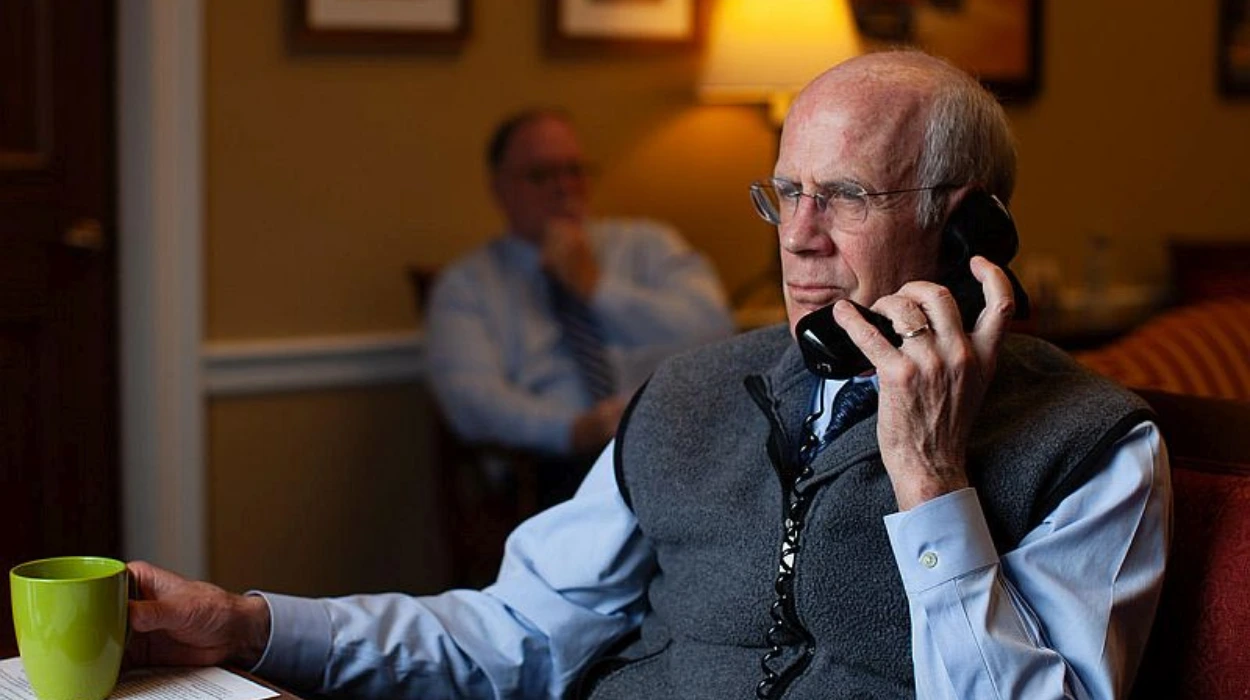

Peter Francis
Welch, a seasoned American politician and lawyer, currently serves as the
junior United States senator from Vermont. With a political career spanning
over four decades, Welch’s journey from state politics to the U.S. Senate has
interested many, particularly regarding his financial standing. Understanding
Peter Welch’s net worth offers insight into how a long-standing public servant
manages personal wealth alongside dedicated public service.
Early Life and
Educational Background
Born on May 2, 1947, in Springfield, Massachusetts, Peter Welch
grew up in a family with professional roots his father was a dentist and his
mother a homemaker. He excelled academically, graduating magna cum laude with a
Bachelor of Arts in history from the College of the Holy Cross. Following his
passion for justice and public service, Welch earned his Juris Doctor from the
University of California, Berkeley, School of Law. His formative years included
work as a community organizer in Chicago, where he collaborated with
organizations affiliated with the Southern Christian Leadership Conference.
This early engagement with civil rights and social justice framed much of
Welch’s later political ethos.
Legal Career and
Foundation of Wealth
Before fully entering politics, Welch built a solid career in law.
After law school, he moved to Vermont and served as a public defender working
for low-income clients. For 30 years, he was a partner in the personal injury
law firm Welch, Graham & Manby, located in White River Junction, Vermont.
This legal career provided Welch with a stable income and the foundation for
his modest but steady personal wealth.
Extensive
Political Career
Peter Welch’s political career is both lengthy and distinguished.
He was first elected to the Vermont Senate in 1980 and served until 1989,
including a historic tenure as the first Democrat to hold the president pro
tempore position. His presence in state politics marked a turning point for
Vermont’s political dynamics, often dominated by Republicans for over a century.
After stepping back from the Senate, Welch unsuccessfully sought a
U.S. House seat and the Vermont governorship but returned to state politics in
the early 2000s. He was again elected president pro tempore of the Vermont
Senate before moving to federal office.
In 2006, when Bernie Sanders vacated the U.S. House seat to run
for Senate, Welch was elected as Vermont’s representative, a position he held
until 2023. In 2022, he successfully ran for the U.S. Senate, filling the seat
of the retiring Patrick Leahy. At age 75, he became the oldest person to be a
freshman senator, underscoring decades of accrued political experience.
Sources of Peter
Welch’s Net Worth
Peter Welch’s net worth, while not extensive compared to some
politicians, reflects a stable financial profile typical of a career public
servant with professional legal background. His wealth sources include:
- Congressional Salary: As a
sitting U.S. Senator, Welch receives a publicly disclosed annual salary. This
standard compensation aligns with federal pay scales and forms the backbone of
his official earnings.
- Legal Career Earnings: Welch’s
prior decades practicing law, particularly in personal injury, contributed
significantly to his personal financial foundation.
- Investments and Property: Financial
disclosures indicate holdings in investments such as retirement accounts and
real estate properties in Vermont and elsewhere.
- Additional Income: Books, speaking
engagements, and other related activities offer supplementary income, though
these constitute a smaller portion of his net worth.
Unlike some legislators, Welch has no known corporate board roles
or substantial private sector business interests, emphasizing his focus on
ethical public service.
Financial
Transparency and Public Accountability
Peter Welch consistently adheres to financial disclosure
requirements mandated for members of Congress. These disclosures provide
detailed insight into his assets, income sources, debts, and financial
transactions, promoting transparency and helping to build trust with
constituents. Welch’s commitment to openness serves as an example of accountability
in politics, helping to counter concerns about corruption and conflicts of
interest in public office.
Political
Philosophy and Wealth Alignment
Welch’s modest net worth aligns closely with his political perspective, which emphasizes
bipartisanship, environmental stewardship, economic fairness, and social
justice. His effort to maintain a humble financial profile supports his public
image as a politician whose values center on service rather than private gain.
His legislative record includes support for healthcare reform,
renewable energy, education funding, and bipartisan cooperation. This approach
resonates with his financial reality, suggesting a focus on public benefit over
personal enrichment.
Role in Key
Political Issues
Throughout his tenure, Welch has demonstrated independence and
pragmatism. He has taken positions that sometimes contrast with vocal
constituent groups, such as prioritizing ending the Iraq War over pursuing
impeachment proceedings in the mid-2000s. His ability to collaborate across
party lines has included working with senators and representatives on health
research funding, agricultural policies, and educational reform.
His stance on issues like gun control, climate change, and
abortion rights situates him firmly within the progressive wing of the
Democratic Party, yet his emphasis on bipartisanship highlights practical
governance.
Comparison with
Other Politicians’ Wealth
When compared to many members of Congress who often possess
significant wealth from private business ventures, investments, or family
fortunes, Peter Welch’s financial status is relatively moderate. This reality
underscores his roots as a lawyer and career politician rather than a corporate
magnate. It also enhances his credibility among voters who seek politicians
with relatable economic experiences and minimal ties to big business.
Challenges and
Ethical Considerations
As a public figure, Welch navigates the challenges common to
politicians regarding public scrutiny of personal finances. He continually
balances the need for privacy with the demand for transparency. By adhering to
disclosure norms and avoiding conflicts of interest, Welch exemplifies ethical
conduct in government.
Moreover, his limited financial entanglements reduce concerns
about undue influence from lobbyists or special interests, reinforcing his
commitment to representing Vermonters.
Personal Life
and Its Role in Financial Stability
Welch’s personal life, including his marriages and family, offers
context to his financial situation. Since 2009, he has been married to Margaret
Cheney, a former Vermont House member with her own political and public service
career, which may influence their combined household finances. Previously
married to Joan Smith until her passing, Welch’s personal experiences shape his
public service dedication and likely influence his financial priorities.
Peter Welch’s net worth reflects the trajectory of a dedicated public servant
with a strong legal career and decades of political experience. His financial
profile, characterized by modest assets and transparency, underscores his focus
on governance and service over wealth accumulation. His stable financial
standing resonates with his political philosophy emphasizing bipartisanship,
fairness, and pragmatic governance.
For constituents and observers, Welch’s net worth and career
exemplify how public officials can maintain integrity and transparency while
effectively serving the public.