
Summary
- Denmark
summoned U.S. charge d’affaires August 27. - Response
to reports of covert U.S. influence campaign. - Campaign
aimed to sway Greenland against Danish rule. - Greenland
is a Danish autonomous territory with an independence movement.
Since assuming office in January, U.S. President Donald
Trump has regularly threatened to invade Greenland, self-governing island part
of the Kingdom of Denmark. Today, the area is inhabited by 57,000 Danish
citizens, a U.S. military installation, and abundant mineral resources.
The Danish government believes at least three U.S. citizens
with connections to the Trump administration have been trying to sway public
opinion through clandestine activities on the island to encourage secession
from Denmark, according to a report by Danish public broadcaster DR, which
cited its sources.
Lars Lokke Rasmussen, the foreign minister of Denmark, said
in a statement that international players are still interested in Greenland and
its place in the Kingdom of Denmark in the wake of the incident.
According to Danish intelligence services, “various
kinds of influence campaigns” were targeting the region in an effort to
“create discord in the relationship between Denmark and Greenland.”
The public is not aware
of any other details surrounding the incident. The accused agents were not
identified by DR.
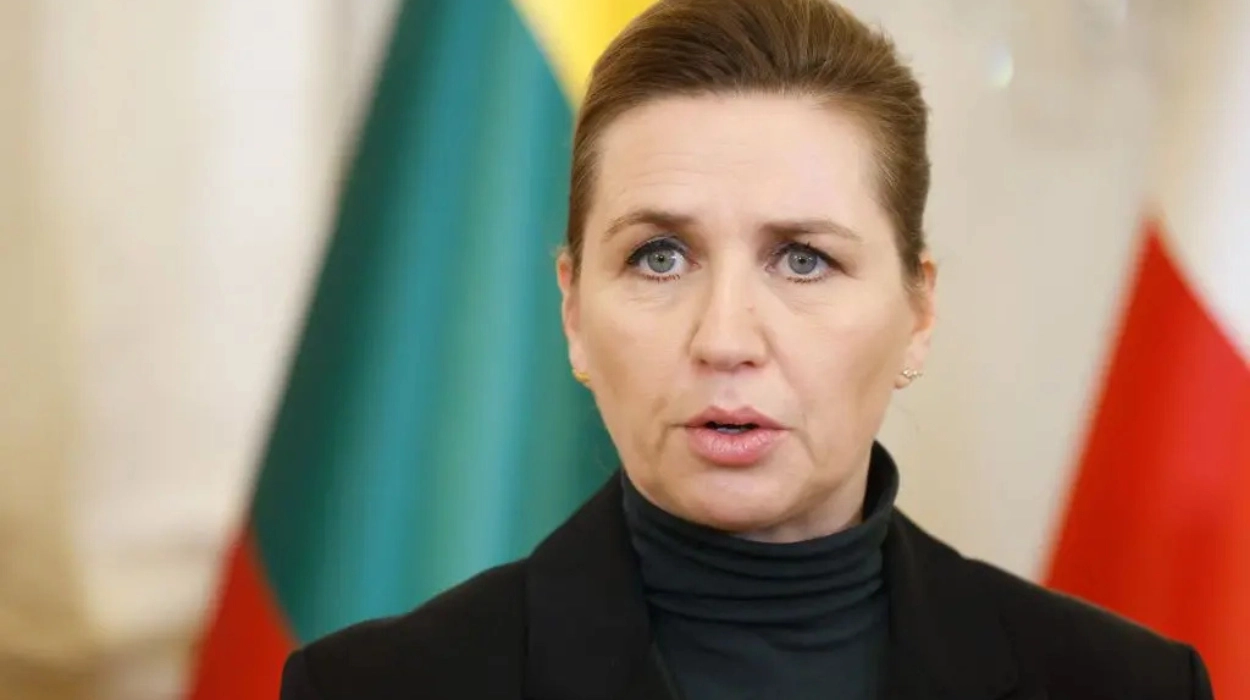
Mette Frederiksen, the prime minister of Denmark, has
previously criticized the United States for its persistent threats to annex
Greenland.
“You cannot annex another country… Not even with an
argument about international security,” Frederiksen said on April 3 in
response to inflammatory remarks from Trump and the White House administration
threatening to assume control of the territory.
Although he did not rule it out, Trump stated on March 29
that there is a “good possibility” that the United States might
conquer Greenland without resorting to armed action.
The U.S. charge d’affaires, Mark Stroh, is now in charge of
the U.S. mission in Copenhagen, but the U.S. Senate has not yet confirmed a
U.S. ambassador to Denmark.
How might these influence efforts affect Greenland’s
relationship with Denmark?
Such covert activities fuel suspicion and mistrust between
Greenland and the Danish government, as well as between Denmark and the United
States, potentially undermining decades of cooperation within the Kingdom of
Denmark.
The influence campaign reportedly seeks to exploit existing
disagreements or fabricate new disputes to drive a wedge between Copenhagen and
Nuuk, weakening political unity and social cohesion.
By promoting Greenland’s independence with U.S. backing,
these efforts could intensify nationalist and separatist movements in
Greenland, challenging Denmark’s authority and territorial integrity.