
Summary
- North Carolina
Democrats held a press conference Tuesday. - They
attacked Republican Senate candidate Michael Whatley. - Portrayed
Whatley as a threat to rural healthcare. - Criticized
his support for Medicaid cuts and policies.
They cited Whatley’s backing of the infamous “one big
beautiful bill,” which state health experts claim could reduce Medicaid
spending in North Carolina by almost $50 billion over the course of the next
ten years.
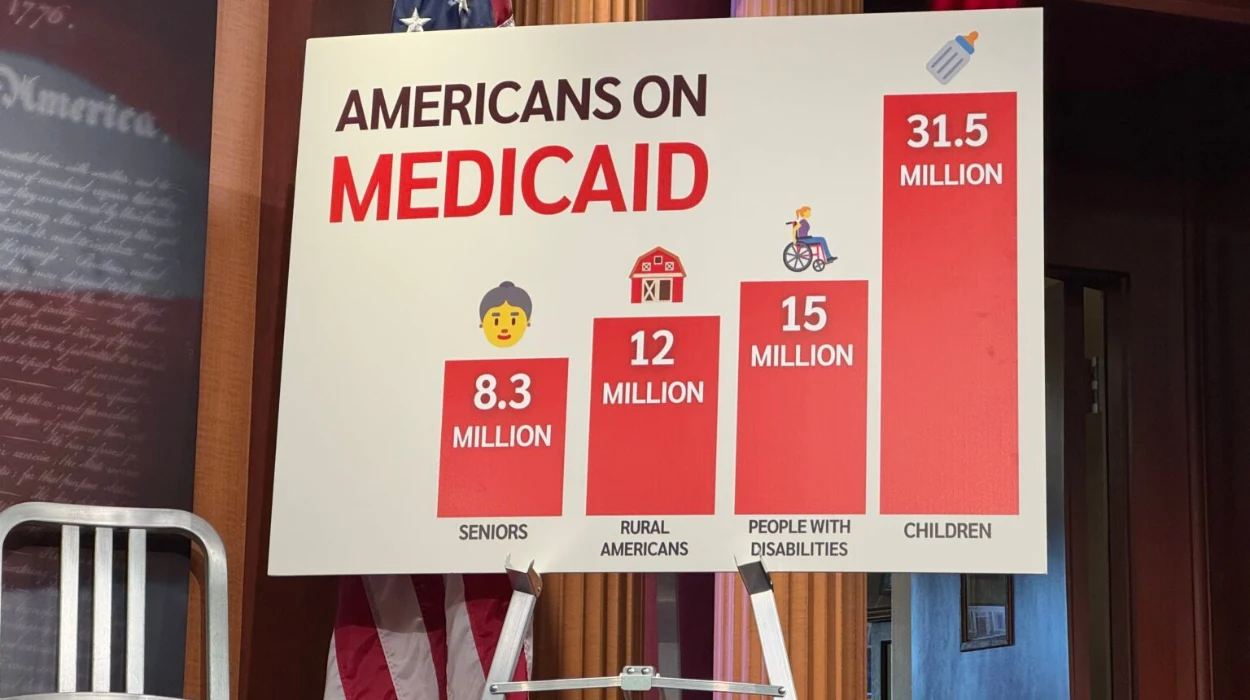
Since Medicaid expansion in 2023, nearly 680,000 North
Carolinians have gained coverage; however, the passage of “one big
beautiful bill,” a comprehensive tax and spending package signed into law
by President Trump earlier this summer, may jeopardize both that coverage and
the continued existence of certain rural hospitals.
Democrats have made it apparent that they want to use the
legislation against Whatley in the 2026 election campaign, despite Whatley
calling it a “huge win.”
Matt Mercer, a spokesman for the North Carolina Republican
Party, refuted the Democrats’ assertions Wednesday, claiming in a statement
that the federal tax and spending plan will benefit working families.
According to Mercer, Democrats “have demonstrated that
they are the party of elitists who hate hard-working Americans, particularly
those in rural North Carolina, and that they don’t care
about working families.” They will soon drop to third place on the voter
rolls as a result of losing hundreds of thousands of voters throughout our
state.
Ahoskie Mayor Weyling White and a Blue Ridge Regional
Hospital patient discussed the potential effects of the changes on their towns
at Tuesday’s virtual session.
“It feels like we took three steps forward, and now we’re
taking five steps back,”
said White.
“With Medicaid expansion, families had
more opportunity to get ahead, and it’s devastating to watch that unravel.”
Blue Ridge Regional Hospital, where Lea Charlton is a
patient, is one of five facilities state officials say are at risk of closing.
Losing it, Charlton said, would mean longer ambulance rides and delays in
treatment.
“If my husband and I have to drive an hour during an emergency, it
could cost us our lives, and I am not kidding about that,”
she said.
“These
decisions have real consequences for families.”
Hospitals are frequently the largest employment in rural
areas and, in certain cases, the only source of emergency care.
Whatley is favoring the rich over preserving healthcare
access for his own community, according to White, a healthcare professional as
well.
Last month, Whatley, who recently resigned as leader of the
RNC, declared his intention to run for the U.S. Senate. After former Governor
Roy Cooper declared his intention to compete for the seat being left empty by
Republican Sen. Thom Tillis, he made his announcement. Most people predict that
the campaign will be among the most costly of the 2026 midterms.
Democrats intend to make health care a key issue in the
Senate election, as evidenced by their early emphasis on the topic. Whatley,
who has never been elected, will have to justify his party chair record and his
backing of Trump’s budget cutbacks.
According to an Emerson College survey conducted on August
1, 36% of North Carolinians said they “have never heard of this
person,” indicating that many people are still unaware of Whatley. Thirty
percent more indicated they were undecided about their feelings toward him or
had no opinion. Democrats might use that as an opportunity to characterize him
as a Washington insider associated with unpopular policies.
Democrats emphasized Whatley’s connections to former Lt.
Gov. Mark Robinson earlier this month in an attempt to paint him as an
extremist.
What specific rural healthcare policies did Democrats cite
against Whatley?
Whatley has championed Medicaid budget reductions that
Democrats say would strip health coverage from over 650,000 North Carolinians
and lead to the closure of five rural hospitals in the state. These cuts
disproportionately harm rural areas reliant on Medicaid funding for hospital
and health services.
Democrats argue that Whatley’s policies threaten to roll
back Medicaid expansion under former Governor Roy Cooper, which has improved
rural healthcare accessibility in North Carolina.
Republican-driven proposals to cap or restrict healthcare
provider taxes would reduce federal reimbursements to states, risking billions
in funding loss for rural hospitals. This could result in hospital closures,
reduced services, and layoffs, directly affecting isolated rural communities.