
Summary
- Europe may spend billions on U.S. arms for Ukraine.
- Payments needed despite efforts to boost their own
defense. - The U.S. sells weapons to Europe, who finances Ukraine
aid. - Europe procures more military aid through industry contracts.
In light of this, Europe may have to spend up to
$90 billion to secure U.S. support in order to prevent another Russian invasion
of Ukraine, which is a clear example of Trump’s “transactional”
diplomacy.
“No matter what form this takes, the Europeans
are going to have to take the lion’s share of the burden,”
Vance said.
“It’s
their continent, its their security and the president has been very clear —
they are going to have to step up here.”
However, none of these is likely to occur. Since
President Trump and Vladmir Putin met in Alaska on August 15, Russia has
resisted the concept of Western troops in Ukraine, claiming that it would
require a security guarantee, which Kyiv knows is impossible.
However, the idea of Europe footing the bill to
keep the U.S. on board triggered a sharp reaction from one European leader.
“Even in the worst nightmare, I cannot imagine
Slovakia buying some weapons in the United States and then sending them for
free to the front in Ukraine,”
said Slovakia’s Prime Minister Robert Fico.
One issue facing EU officials is that the U.S.
arms purchase may undermine efforts by the group to increase funding for its
own defense sectors, develop a domestic military, and wean itself off of
reliance on U.S. weapons.
Investments in European goods are given priority
under the EU’s new SAFE initiative, which offers member states €150 billion in
loans to spend on defense.
When questioned this week about the EU
purchasing American weaponry, a European Commission spokesperson avoided the
subject by claiming that it was not discussed during the August 18 meeting
between European leaders and Trump in Washington.
“I would not have a specific comment on it,”
she
said.
“In general you know the effort we are bringing forward to maintain
support for Ukraine, also military support, and also our SAFE program and how
we are trying to integrate our industries and advance defense spending and
innovation together with Ukraine.”
Yohann Michel, an analyst with the French IESD
think tank, said Europe had no choice but to pay the U.S. in the short term.
“Most of the weaponry needed comes from the
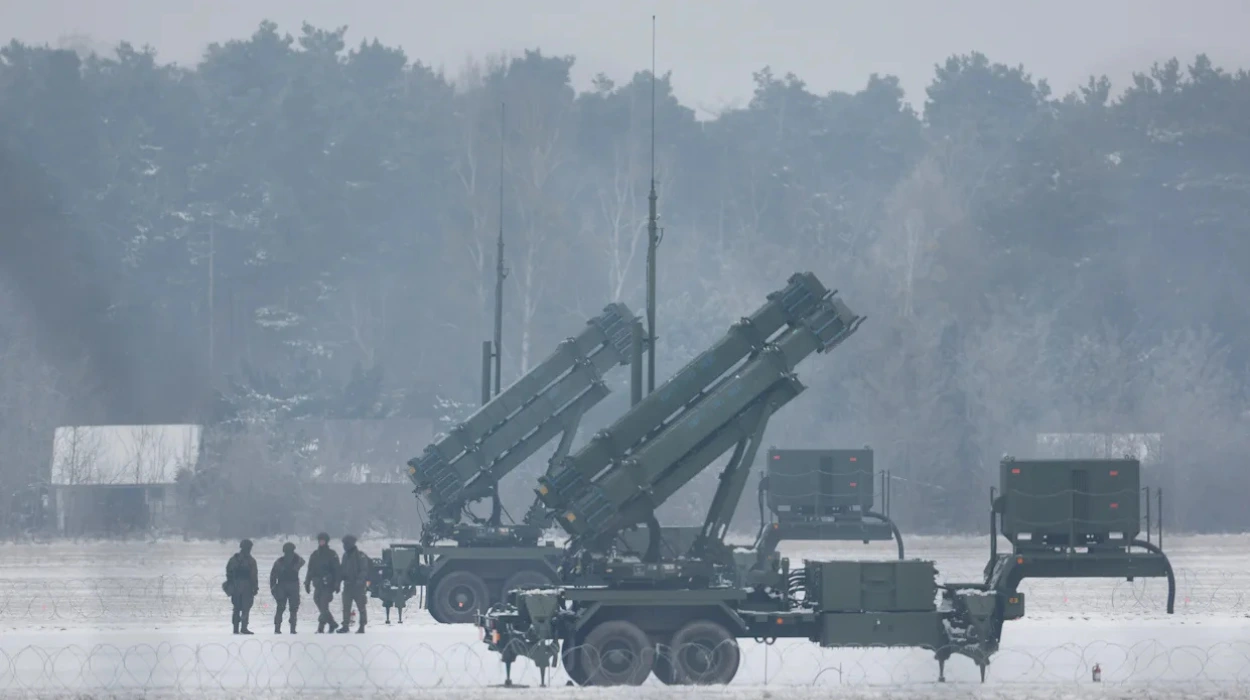
U.S., like Patriot. If we don’t produce it, we need to pay,”
he said.
“We need
Ukraine to resist. If it falls, European security is threatened. If the way to
avoid that is to pay the U.S., it has to be done in the short term. After all,
it is what Europe has been doing for 80 years. Ninety percent of countries
buying the F-35 will admit they are buying U.S. security. Now it becomes a more
open transaction with Trump.”
Christian Mölling, senior advisor at the
European Policy Center, said Europe was avoiding discussion about the billions
that could be paid to the U.S.
“My impression is that people are avoiding this
debate until we know if the security guarantees are actually put into place,”
he said.
Mölling added that Europe would have little
choice but to pay.
“There is no alternative to Patriot batteries,”
he said.
“I don’t think we would see Brussels handing over a $90 billion check
to the U.S., but a number of smaller payments would be made.”
How would European financing of US arms change
NATO burden-sharing?
European NATO members paying billions to buy
U.S. weapons for Ukraine will increase their financial contributions toward
collective defense. This may improve Europe’s share of NATO defense spending in
purely financial terms, which has long been a contentious issue with the U.S.
urging Europe to spend more.
While Europe finances U.S. arms purchases, it
continues relying heavily on U.S. military technology and production capacity.
This delays Europe’s progress toward defense industrial autonomy and strategic
independence, as Europe does not spur its domestic arms industry as quickly by
buying primarily American weapons.
The U.S.-financed arms support to Ukraine buys
Europe time to build up its own defense production capabilities and modernize
forces, theoretically strengthening a “European pillar” of NATO in the longer
term.