
Summary
- Trump administration sanctions Canadian ICC judge.
- Sanctions target judges investigating US officials.
- Measures also aimed at prosecuting Israeli leaders.
- US State Department imposes new restrictions.
- Actions reflect opposition to ICC investigations.
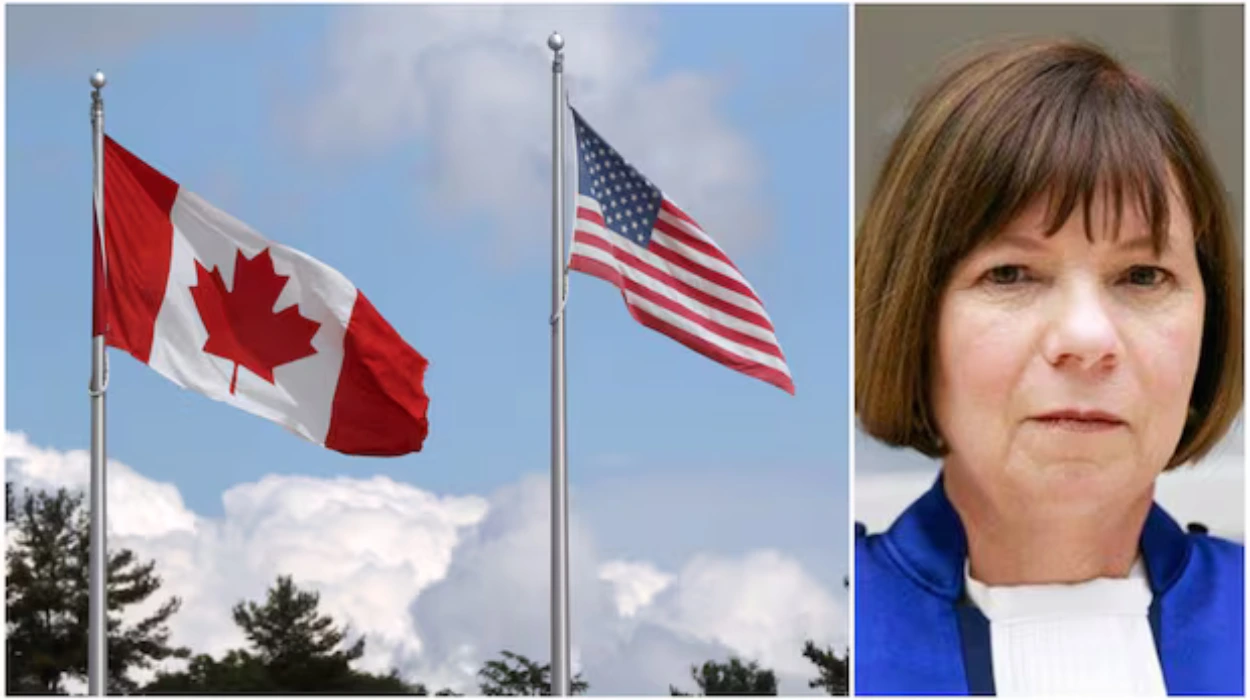
Judge Kimberly Prost of Canada was reprimanded,
according to the State Department, for her decision to permit the ICC’s probe
into American servicemen in Afghanistan.
The State Department linked the decision to the
ICC’s probe of Israel’s actions in Gaza and the Israeli-occupied West Bank.
Other sanctioned ICC jurists were Frenchman Nicolas Guillou, Fijian Nazhat
Shameem Khan, and Senegalese Mame Mandiaye Niang. Any assets they own in U.S.
jurisdictions are frozen as a result of the penalties.
“A flagrant attack against the independence
of an impartial judicial institution which operates under the mandate from 125
[countries] from all regions,”
the court stated on Wednesday, expressing regret for the punishment.
“They constitute also an affront against
[these countries], the rules-based international order and, above all, millions
of innocent victims across the world,”
the statement continued.
“The
ICC will continue fulfilling its mandates, undeterred, in strict accordance
with its legal framework as adopted by the States Parties and without regard to
any restriction, pressure or threat.”
In a statement, U.S. Secretary of State Marco
Rubio called the court “a national security threat that has been an
instrument for lawfare against the United States and our close ally
Israel” and said the U.S. has remained steadfast in its opposition to the
ICC’s “illegitimate judicial overreach.”
“I urge countries that still support the
ICC, many of whose freedom was purchased at the price of great American
sacrifices, to resist the claims of this bankrupt institution,”
he said.
France and the UN were outraged by the action,
and Paris called on Washington to lift the sanctions.
The Trump administration’s moves were previously
denounced by the ICC, which described them as an effort to compromise the
independence of an international court.
In March 2020, Prost was a member of an ICC
appeals chamber that unanimously gave the court’s prosecutor permission to look
into claims of war crimes and crimes against humanity that have been
perpetrated in Afghanistan since 2003, including the involvement of American
military personnel.
Since 2021, the inquiry has shifted its focus
from the U.S. role to alleged crimes committed by the Taliban forces and the
Afghan government.
Both France and the UN said the jurists’ work is
crucial for international justice.
“Their role is essential in the fight
against impunity,”
a statement from the French Foreign Affairs Ministry
said.
The U.S. sanctions undermine the foundation of
international justice, UN spokesperson Stéphane Dujarric said, adding:
“The [U.S.] decision imposes severe impediments on the functioning of the
office of the prosecutor.”
Since the first term of President Donald Trump,
the U.S. administration has disapproved of the court. Because of the court’s
work on Afghanistan, the White House sanctioned then-chief prosecutor Fatou
Bensouda and one of her senior staffers in 2020.
Why does the ICC view US sanctions as a threat
to its independence and victims?
The ICC is an impartial judicial institution
mandated to investigate and prosecute serious crimes like genocide, war crimes,
and crimes against humanity without political interference. U.S. sanctions
targeting individual ICC judges and prosecutors are seen as direct attempts to
coerce and undermine this judicial independence.
The sanctions are intended to pressure the ICC
to halt investigations into U.S. personnel and Israeli officials, which the
U.S. views as illegitimate. This coercion risks compromising the Court’s
objectivity and willingness to pursue justice impartially.
Millions of victims worldwide rely on the ICC as
a last resort for justice when national systems fail. Sanctions against the ICC
and its officials hinder the Court’s ability to investigate and prosecute
crimes that affect victims in various countries, including Palestine,
Afghanistan, Ukraine, and others.