
Summary
- Trump said he’ll know in two minutes if a deal is
possible. - Ready to walk away if deal talks fail.
- The meeting aims to address the ongoing U.S.-Russia
conflicts. - Talks set amid intense scrutiny and high stakes.
- Trump emphasizes quick judgment on potential agreement
success.
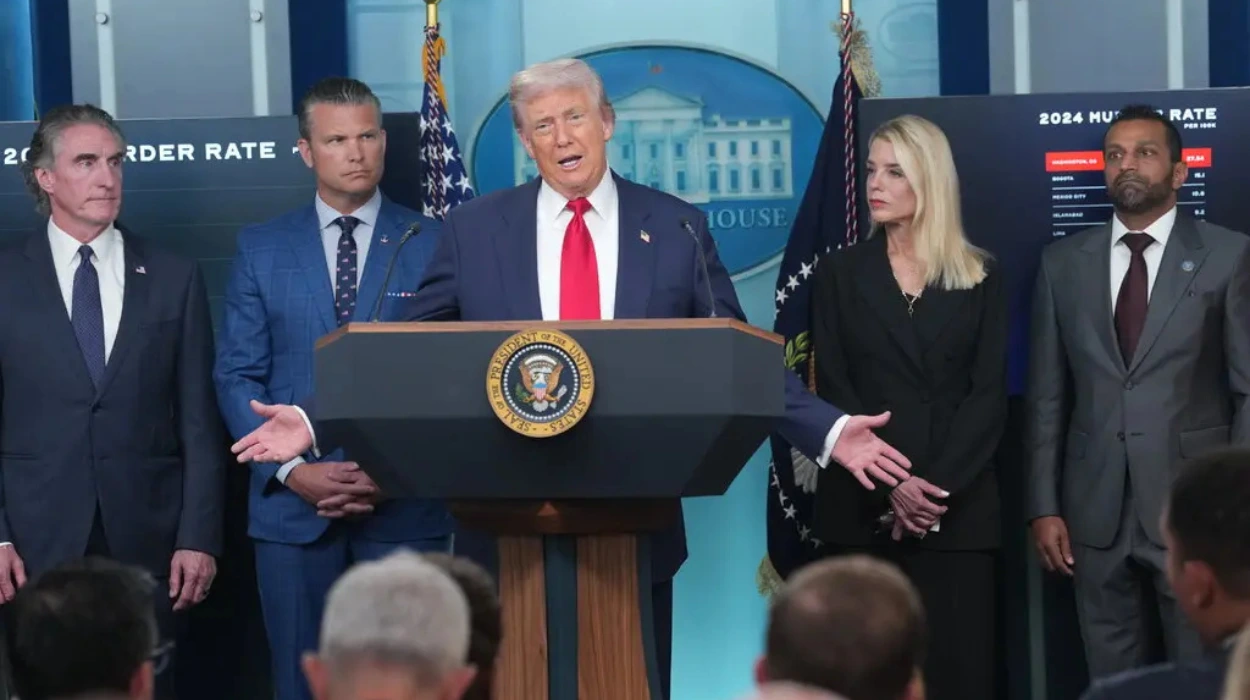
During a lengthy press conference, Mr. Trump
restated his intention to negotiate what he referred to as “land
swaps” and refuted remarks made by Volodymyr Zelensky, the president of
Ukraine, over the weekend that his nation’s Constitution forbade him from
ceding land to an intruder.
“I’m going to Russia on Friday,”
Mr.
Trump told reporters as he described the meeting, and he reiterated the same
statement a few minutes later. Actually, Alaska, which has not been a part of
Russia since 1867, when it was sold to the United States for $7.2 million, will
host the gathering.
“I’m going to see what he has in mind,”
Mr.
Trump said of Mr. Putin, whom he has talked to over secure lines at least
five times since he took office in January. He said he would judge “if it’s a
fair deal.”
He added,
“I may leave and say good luck, and
that’ll be the end.”
However, Mr. Trump’s own explanation of his
objectives for Friday’s negotiation, the most important international gathering
yet in his second term, was instructive, both in terms of what he left out and
what he included. Both the Ukrainians and Washington’s European allies, who
have pledged to continue equipping Ukraine regardless of the vote in Anchorage,
are concerned about it.
Mr. Zelensky, who has not yet received an
invitation to participate in the negotiations in Alaska, has stated that any
agreement must begin with a cease-fire or ceasefire of some sort in order to
prevent conversations from taking place in the midst of ongoing territory gains
and airstrikes. Mr. Trump has not made it clear that a ceasefire must be
established first.
He never once brought up security assurances for
Ukraine during his hour-long news conference, which are meant to ensure that
Mr. Putin doesn’t use a lull in hostilities or new territorial advances as an
excuse to regroup, re-arm, and try to retake the entire nation.
Additionally, Mr. Trump made no commitment to
ensuring Ukraine gets the weapons, intelligence, and collaboration it needs to
protect its territory and prevent further aggression by Russia. During an
appearance on Fox News Sunday, his vice president, JD Vance, who has long
criticized U.S. aid to Kyiv, was fairly specific.
But on Sunday, Mr. Rutte was clearly drawing
some guardrails for the coming negotiation.
“Next Friday will be important because it will
be about testing Putin, how serious he is on bringing this terrible war to an
end,”
Mr. Rutte said on ABC’s
“This Week.”
“When it comes to full-scale
negotiations, and let’s hope that Friday will be an important step in that
process,”
territory will be only one issue, he said.
“It will be, of course, about security
guarantees, but also about the absolute need to acknowledge that Ukraine
decides on its own future, that Ukraine has to be a sovereign nation, deciding
on its own geopolitical future — of course having no limitations to its own military
troop levels,”
Mr. Rutte said.
“And for NATO, to have no limitations on our
presence on the eastern flank.”
Mr. Trump said none of that in his comments in
the White House briefing room on Monday. But he made clear that striking an
agreement was the key.
“I make deals,”
he said.
Mr. Trump has made no secret of his desire to
win a Nobel Peace Prize, and has claimed that he was the driving force in
recent cease-fires or peace accords in disputes between India and Pakistan,
Azerbaijan and Armenia, and other regional conflicts.
“What’s the definition of a good deal?”
Mr.
Trump asked reporters.
“I’ll tell you after I hear what the deal is, because
there could be many definitions.”
What are the main factors affecting Trump’s
approach to Ukraine talks?
Trump employs a “mediation with
muscles” approach, using threats, economic leverage (such as suspending
military aid), and military posturing to pressure parties into negotiations on
his terms. This approach emphasizes coercion and quick results but risks
creating fragile agreements.
Trump is willing to negotiate directly with
traditionally excluded or adversarial parties, such as Russia, Hamas, and
others. This reflects a transactional, non-ideological style that prioritizes
face-to-face deals over diplomatic norms but risks compromising principles such
as international law and fairness.
Trump favors rapid agreements rather than
lengthy diplomatic processes. He pressures Ukraine and others for fast
concessions, raising concerns about long-term security and stability in the
region.