
Summary
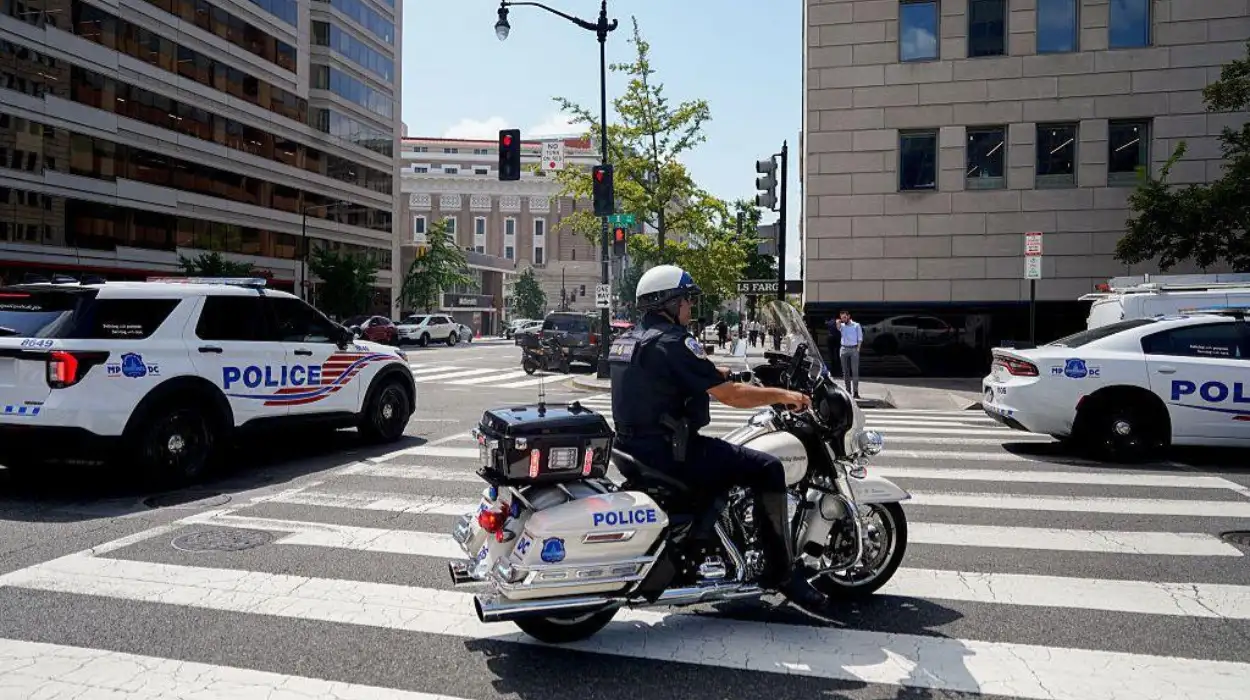
- Trump federalizes DC police, deploys National Guard.
- 800 National Guard troops sent to Washington.
- Claims city overtaken by violent gangs, criminals.
- Pledges crackdown on crime and homelessness.
- Attorney General Pam Bondi controls DC police.
On Monday, Trump proclaimed a “public
safety emergency” and sent out 800 National Guard members to support the
hundreds of federal law enforcement officers who had been sent out over the
weekend.
“It’s becoming a situation of complete and
total lawlessness,”
he told reporters at the White House.
Although there was an increase in crime in 2023,
records indicate that it has since decreased, and the city’s mayor, Muriel Bowser,
has denied the president’s assertions regarding crime. The city’s violent crime
rate is likewise at its lowest level in 30 years.
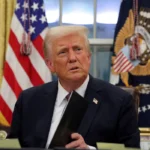
“I’m announcing a historic action to rescue
our nation’s capital from crime, bloodshed, bedlam and squalor and worse,”
Trump said during a news conference in which he was flanked by US Attorney
General Pam Bondi, who will lead the city’s police force while it is under
federal control.
“This is liberation day in DC, and we’re
going to take our capital back,”
he said.
Trump claimed that “drugged out maniacs and
homeless people” as well as “violent gangs and bloodthirsty
criminals” had taken over Washington, DC.
The city’s Metropolitan Police Department
reports that between 2023 and 2024, homicides fell by 32%, hitting their lowest
level since 2019.
According to the figures, there has been another
significant decline of 12 percent this year.
Despite acknowledging that there had been a
“terrible” surge in crime in 2023, which was consistent with a
nationwide trend, Democratic Mayor Bowser denied that the city was experiencing
a crimewave.
The army said in a statement that between 100
and 200 of the 800 National Guard members who will be mobilized will be
deployed and assisting law enforcement at any given moment.
In addition to that deployment, Trump announced
that he will use the District of Columbia Home Rule Act to directly federally
oversee the city’s police force.
Former President Richard Nixon enacted the
legislation to provide citizens of Washington, DC, the only US city outside of
the 50 states, the ability to choose their own mayor and city council.
A disclaimer, however, states that in the event
that “special conditions of an emergency nature exist,” the president
may assume command of the city’s police force.
Additionally, he has reacted fiercely to the
recent attack in the city on a former employee of the Department of Government
Efficiency (Doge).
Trump said the worker was “left dripping in
blood” after being “savagely beaten by a band of roaming thugs”
during his news conference on Monday.
He added that a Democratic congressman and an
intern were among the other federal government workers and elected people who
had been attacked.
“This is a threat to America,”
Trump
said.
Trump sent 2,000 National Guard members to Los
Angeles in June to quell riots over raids on undocumented migrants, marking the
first time he has used the force.
The 2021 Capitol riot was the last occasion the
National Guard was sent to Washington, DC.
What legal authority does Trump cite to take
control of D.C. police and deploy troops?
President Donald Trump cited Section 740 of the
District of Columbia Home Rule Act of 1973 as the legal authority to take
control of the D.C. Metropolitan Police Department and to deploy the National
Guard in Washington, D.C.
This section gives the president the power to
use the D.C. police force for “federal purposes” that he deems
“necessary and appropriate.” Trump announced putting the police under
direct federal control under this authority and declared a public safety
emergency.
However, this control is temporary and limited
to 30 days unless extended by congressional joint resolution. Fully
federalizing the D.C. police force beyond this period would require congressional
repeal or further legislative action, as the Home Rule Act generally grants
D.C. residents local governance over their police and other affairs.