
Summary
- GAO says Trump froze $8 billion NIH funding illegally.
- Violated law by withholding Congress-approved money.
- NIH canceled 1,800+ grants, delayed awards.
- No lawful notice or justification provided.
- GAO may sue; lawmakers demand funding restored.
According to the GAO study, Trump’s early-return
orders and associated administrative directives violated the Impoundment
Control Act by not allocating funds that Congress, which is constitutionally
empowered to control the purse, had authorized.
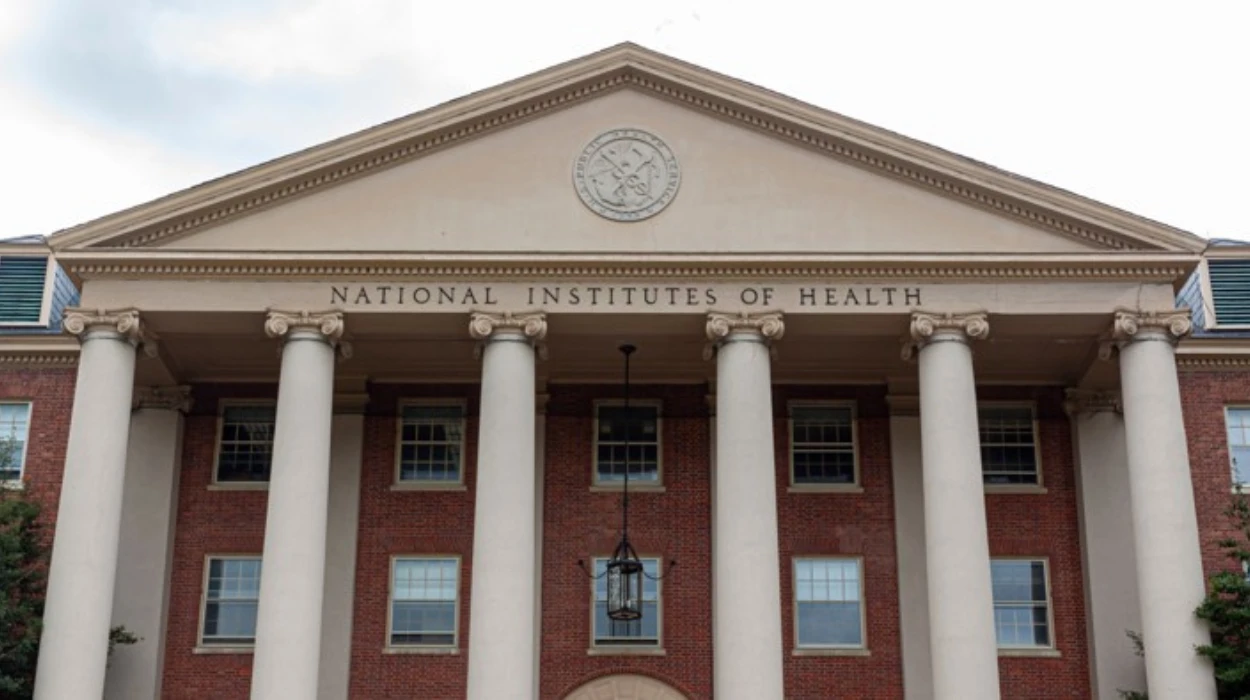
The administration delayed about 1,800 health
research funding, according to the report.
Funding for numerous health research grants
pertaining to environmental damage, transgender concerns, diversity, equity, and
inclusion was discontinued by Trump’s Inauguration Day order. In a memo, the
Department of Health and Human Services instructed all of its agencies, including NIH, to stop posting notifications
of grant review board meetings in the Federal Register.
The sessions were described as “a key step
in NIH’s grant review process” by GAO, an independent investigative body
that answers to Congress. Since then, HHS has resumed posting notices of the
meetings.
According to the GAO, the NIH distributed $8
billion less from February to June than it had committed to over the previous
two years, a decrease of more than one-third. According to GAO, the difference
between 2025 spending and prior years’ spending widened further, with NIH
obligated to provide less award cash each month.
According to GAO, the Impoundment Control Act
and the Constitution, which recognized Congress as the arm of government in
charge of financial choices, were broken by the failure to finance grant
awards.
If a law is passed by Congress and signed by a
president, it must be carried out by the executive branch, the watchdog said.
“The President must ‘faithfully execute’ the law
as Congress enacts it,”
the report said.
“Once enacted, an appropriation is a
law like any other, and the President must implement it by ensuring that
appropriated funds are obligated and expended prudently during their period of
availability unless and until Congress enacts another law providing otherwise.
… The Constitution grants the President no unilateral authority to withhold
funds from obligation.”
A rescissions bill, like the one Congress passed
last month to defund foreign aid and public broadcasters, is one example of a
situation that permits a funding freeze, but the GAO stated that these
conditions did not apply in this instance.
A new presidential administration may be able to
guarantee that grants are given according to its goals by allowing delays.
However, the GAO stated that a total financial ban is unlawful. According to
the report, there is no proof that the $8 billion in unused grant funds were
replaced by other grant awards or any other kind of financing at HHS.
How did the GAO determine the Trump
administration violated the Impoundment Control Act?
The Impoundment Control Act mandates that the
President or executive agencies must notify Congress via a special message
about any delay (deferral) or cancellation (rescission) of appropriated funds,
providing justifications. The Trump administration did not submit such
notifications to Congress regarding the NIH funds.
Between February and June 2025, NIH obligated
almost $8 billion less toward awards compared to the same period in 2024, and
over 1,800 NIH grants were terminated prematurely, indicating a clear reduction
in spending.
Publicly available evidence, including NIH and
HHS data showing reduced obligations and expenditures, proved the
administration withheld funds intentionally to comply with executive orders
aiming to pause or cancel certain grants.