
Summary
- Federal judge: humanities grant cuts unlawful.
- Abrupt termination violated Congressional approval.
- Humanities groups’ lawsuit allowed to proceed.
- Funding cuts risk layoffs, cancel programs.
- Judge: Congress controls budget decisions.
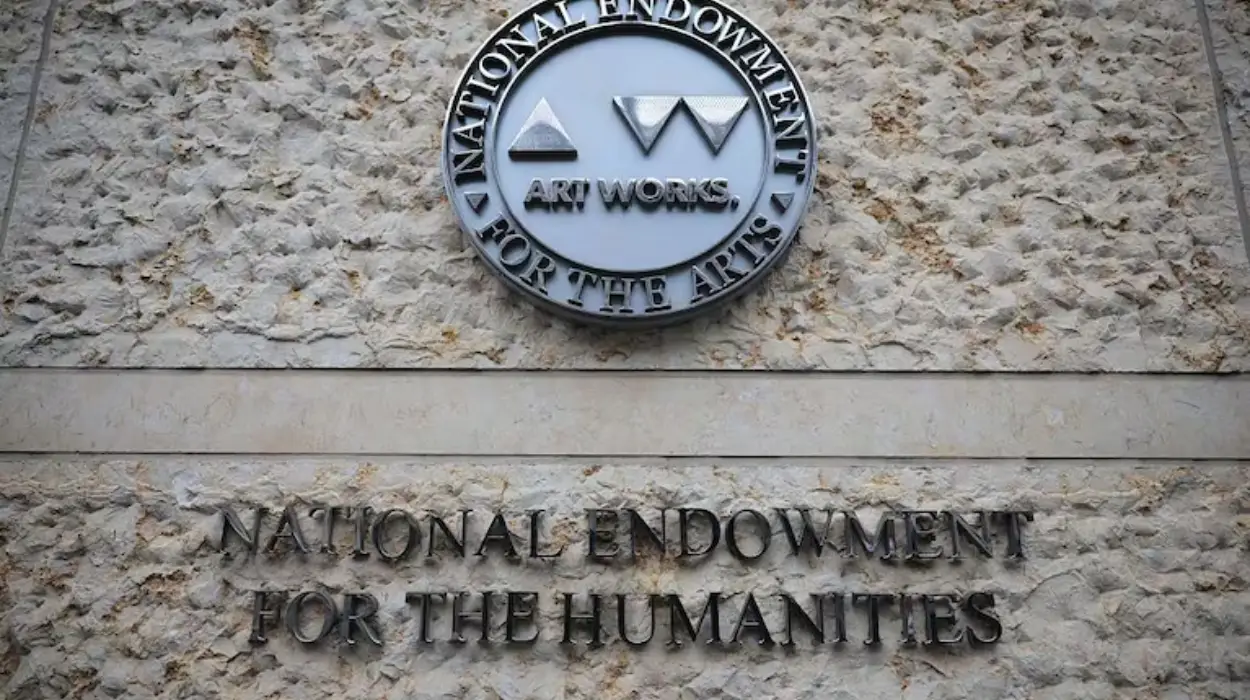
The National Endowment for the Humanities’
awards to thousands of organizations nationwide, including humanities councils,
museums, historic sites, archives, libraries, educators, and media outlets,
were canceled by the Department of Government Efficiency (DOGE) in April.
The Federation of State Humanities Councils and
Oregon Humanities filed a lawsuit against DOGE and the endowment in May,
claiming that the abrupt funding reductions constituted an “attempted destruction,
spearheaded by DOGE, of the congressionally established federal-state
partnership.”
In his decision, U.S. District Judge Michael H.
Simon wrote that the councils were “likely to succeed on their claim that the
withholding of the funds at issue in this case is unconstitutional.”
He added,
“The United States Constitution exclusively grants the power of the purse to
Congress, not the President.”
Simon also wrote that,
“Federal funding for the
arts and humanities has enjoyed bipartisan support for decades, with Congress
continuing to strengthen the statutes governing NEH and provide stable funding
generation after generation.”
In a statement, Phoebe Stein, president of the
Federation of State Humanities Councils, called the judge’s ruling “excellent”
but cautioned that “humanities councils are still operating without their
Congressionally appropriated funds, and many have already laid off staff and
cancelled vital programs as a result.”
Adam Davis, executive director of Oregon
Humanities, said the ruling is
“motivating” and “one step — among many that are
needed — in the large, ongoing endeavor to knit our communities and the country
closer together.”
In a similar vein, a federal judge in New York
ruled in July that the government had broken the law by canceling previously
awarded grants for the humanities. It stated that until the matter is tried,
the grants ought to be restored.
NPR has yet to receive a response from the
National Endowment for the Humanities.
What are the arguments supporting the judge’s
ruling on the humanities grants’ legality?
The judge emphasized that the U.S. Constitution
grants exclusive authority over federal spending to Congress, not the President
or executive agencies. The sudden termination of grants, previously approved by
Congress, unlawfully usurps this power of the purse.
The grants were awarded under statutes that
require funds to be made available to state humanities councils and other
recipients. The executive branch’s unilateral refusal to disburse these
congressionally appropriated funds violates these legal mandates.
The judge noted this as an important legislative
context underscoring the grants’ protected status.