
Summary
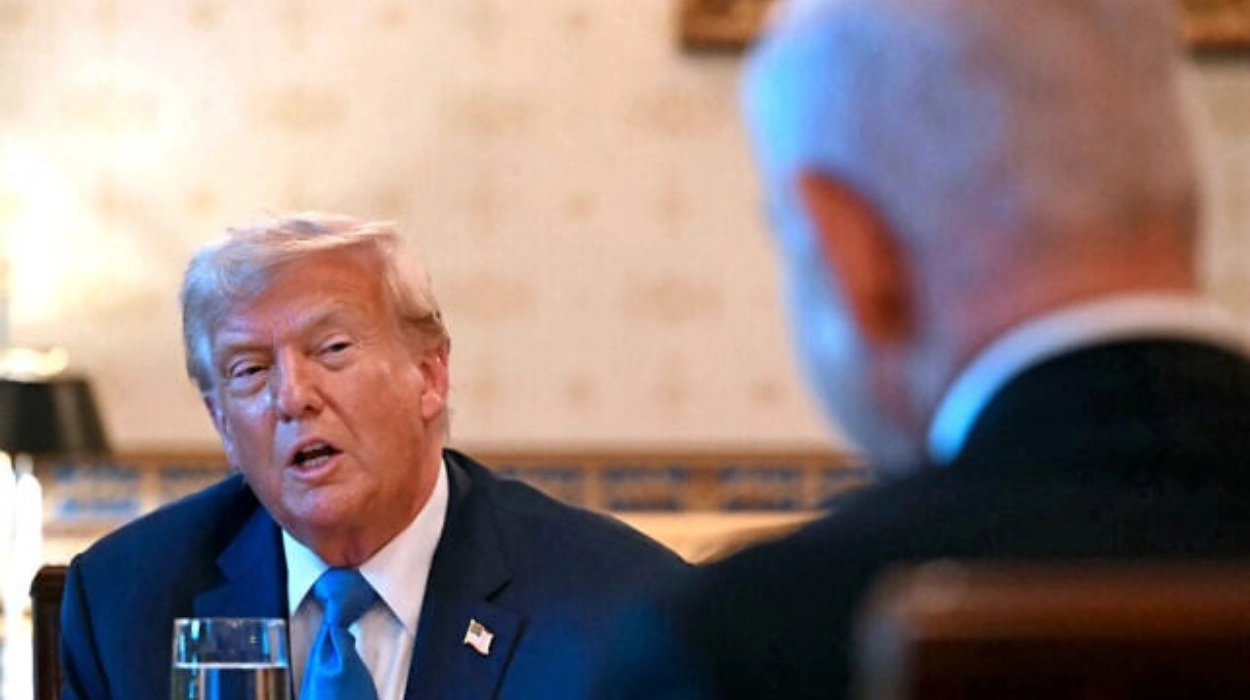
- Trump believes Netanyahu prolongs Gaza war for power.
- The US sees Israel’s war goals achieved long ago.
- Trump frustrated by failed ceasefire, aid delays in
Gaza. - Envoy Witkoff assessing Gaza aid amid humanitarian
crisis. - Despite tensions, no major US policy shift was
expected.
Trump and many of his advisors are more eager
than ever to end the fighting in Gaza, according to the Thursday story, which
was based on many unidentified sources. This is because Israel’s actions
throughout the war have been widely condemned, even by a rising number of
isolationists in the Republican Party.
The American president has apparently grown
convinced that Israel has long since accomplished its military goals in Gaza
and that the continued fighting is mostly driven by the premier’s political
interests, since negotiations for a ceasefire and hostage agreement are once
again encountering significant obstacles.
The report was released during a meeting between Netanyahu and Trump’s Mideast envoy
Steve Witkoff in Jerusalem on Thursday afternoon to talk about the deadlocked
talks between Israel and Hamas.
During his trip, Witkoff was also scheduled to
make a rare stop in Gaza to tour aid distribution centers operated by the
US-Israel-backed Gaza Humanitarian Foundation, whose activities have provoked
significant international criticism in recent months due to almost daily
reports of Israeli troops carrying out fatal shootings at their locations.
Israel claims the number is inflated, but the
Hamas-run Gaza health ministry reports that Israeli fire has killed over 1,000
individuals close GHF locations.
According to two US officials who talked to The
Atlantic, Trump gave Witkoff the responsibility of developing his own
evaluation of Gaza’s humanitarian condition and the GHF’s feasibility as a
distributor of aid.
According to reports, Trump advisors have also
talked about pressuring Israel to expand the amount of food and other supplies
it permits to enter the Strip so that enough will reach people, even if some
are stolen by Hamas, as Israel says has repeatedly occurred.
The statements were a shift from some of his
previous remarks about Gaza’s food shortages, where he resisted the Israeli
stance, such as at a press conference on Tuesday with British Prime Minister
Keir Starmer.
Trump said, “Based on television, not
particularly, because those children look very hungry,” in response to a
question about whether he was persuaded by Netanyahu’s assertion that there is
no starving in Gaza.
The source claims that Trump is not just driven
by humanitarian concerns to put an end to the violence but has also been irate
by his repeated inability to fulfill campaign pledges, including establishing
peace in the Middle East.
With the Abraham Accords, which restored
relations between Israel and numerous Arab nations, the US president aimed to
carry on the legacy he established during his first term and continue to
promote peace in the area.
Earlier in July, Greene’s attempt to stop US
financing for Israel’s Iron Dome missile defense system was defeated 422–6,
demonstrating her continued isolation with Republican lawmakers. The change has
primarily taken place outside of the corridors of power, especially among young
people on the right in America.
According to a CNN poll this month, just 52% of
Republicans now think that Israel’s actions are entirely justifiable, down from
68% in 2023.
According to a Pew Research study conducted in
April, Republicans over 50 have remained steadfastly pro-Israel since 2022, but
at the same period, Republican young persons’ disapproval of the Jewish state
increased from 35% to 50%.
Both a Netanyahu spokeswoman and a White House
official denied The Atlantic’s request for comment.
What evidence supports Trump’s belief about
Netanyahu’s political motives in Gaza?
Trump reportedly believes Netanyahu is
undermining ceasefire negotiations in Gaza, which are crucial to stabilizing
the region and encouraging economic recovery. This has been reported by two
unnamed Trump administration officials to The Atlantic, who say that
Netanyahu’s positions are frustrating US hopes for peace and humanitarian
relief.
Analysis from sources such as Chatham House
indicates Netanyahu’s strategy is focused on maintaining his right-wing coalition
and avoiding early elections amid poor polling performance. His promise of
“total victory” allows the indefinite continuation of war, justifying ongoing
military action and preventing political fallout.
Netanyahu resists political solutions involving
the Palestinian Authority, effectively enabling Hamas control of Gaza to
continue as a pretext for prolonging fighting.