
Key Points
- Artificial
intelligence (AI) technology may soon offer Florida farmers real-time
access to crop damage data during hurricanes. - This
development aims to improve disaster response and agricultural resilience
in the face of increasing hurricane-related losses. - The
initiative aligns with global efforts to apply AI for solving critical
challenges, including climate change and disaster response. - The
approach was featured among discussions at international summits
highlighting AI’s role in health, climate, and humanitarian actions. - No
detailed deployment timeline or technological specifications have yet been
publicly disclosed. - This
innovation could potentially help farmers better assess and manage crop
losses, aiding quicker recovery post-disaster.
In response to the increasing threat of hurricanes impacting Florida’s agricultural sector, new artificial intelligence technology is poised to revolutionize how farmers assess and respond to crop damage. By leveraging advanced AI algorithms and satellite data, this innovation aims to provide timely, accurate information during hurricanes, enabling farmers to make informed decisions swiftly. This development reflects a broader global trend of deploying AI to tackle climate-related challenges and enhance disaster resilience. As the agricultural community awaits wider implementation, experts emphasize the importance of ethical, sustainable AI use to maximize benefits for farmers and the environment alike.
What is the new AI technology offering to Florida
farmers?
Artificial intelligence may soon enable Florida farmers to
gain unprecedented access to data detailing crop damage during hurricanes. This
technology promises to support agricultural communities by providing critical
information precisely when it is most needed—during and immediately after
severe weather events.
Why is AI important for farmers dealing with hurricanes?
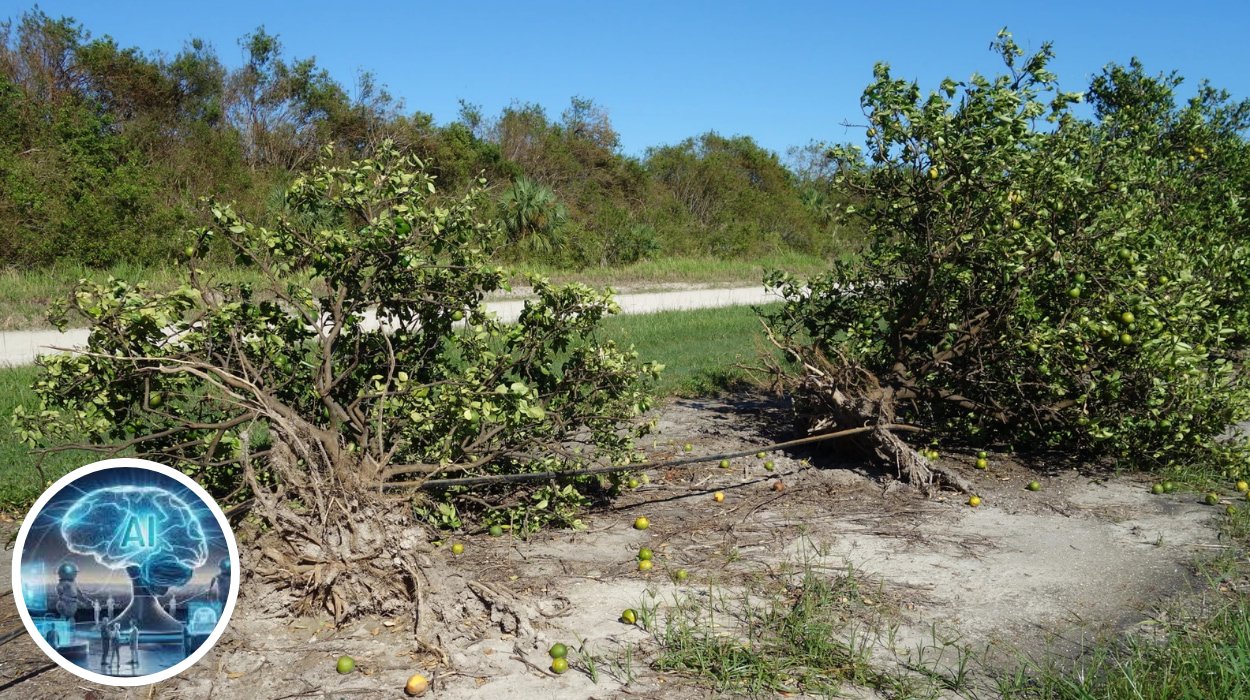
Florida is frequently impacted by hurricanes, which can
devastate crops and disrupt supply chains. Currently, farmers often lack
immediate, accurate information about the extent of damage, delaying recovery
efforts. By integrating AI-driven data analytics, farmers could assess damage
remotely and promptly, facilitating better decision-making on mitigation,
insurance claims, and replanting strategies.
How does this fit into wider global AI initiatives?
According to a report from the World Health Organization
(WHO), the International Telecommunication Union (ITU), and the World
Intellectual Property Organization (WIPO), AI is increasingly recognized as a
valuable tool for addressing global challenges such as climate change, health
inequities, and disaster response. At the 2025 AI for Good Global Summit held
in Geneva, AI-driven solutions for disaster response were highlighted as a
priority area. This new AI application for Florida’s agricultural resilience
aligns with these broader efforts to ethically and sustainably harness AI’s
potential to mitigate climate-related impacts worldwide.
When might the AI crop damage data system be implemented?
While there is significant interest and discussion
surrounding AI’s role in disaster response, specific timelines for the rollout
of AI-powered crop damage assessment systems in Florida have not yet been made
public. The efforts remain in the developmental or pilot stages, referenced as
part of emerging AI solutions showcased during AI summits earlier this year.
Who stands to benefit from this AI technology?
Florida’s farming community will be the primary
beneficiaries. Farmers will receive timely, actionable insights to gauge the
status of their crops amidst hurricanes, potentially saving resources and
guiding recovery better. Agricultural stakeholders including farm insurers,
government agencies involved in disaster management, and supply chain operators
could also benefit by improving response coordination.
What are experts saying about AI in disaster management?
The discussions led by global experts at forums such as the
AI for Good Summit emphasize that AI must be developed with ethical
considerations and sustainability at its core. The goal is to ensure AI tools
serve humanity effectively, particularly in vulnerable sectors such as
agriculture, health, and disaster relief.
What are the potential impacts of AI on agricultural
disaster management?
If successfully implemented, AI could revolutionize how
hurricane-related agricultural damage is assessed. Rapid, AI-based analysis
could lead to enhanced preparedness and recovery, reducing economic losses for
farmers and the wider agricultural economy. The technology’s ability to provide
near real-time data during extreme weather events would mark a major advance
over traditional, manual damage surveys conducted after the fact.
How reliable and accurate is AI for this kind of work?
The accuracy of AI-driven damage assessments depends on data
quality—satellite imagery, weather data, and on-the-ground inputs—and the
robustness of the AI models. As the technology matures, it is expected that
precision will improve, but ongoing validation and refinement will be critical.
Collaboration between AI developers, agricultural scientists, meteorologists,
and farmers themselves will help ensure the AI solutions meet practical,
real-world needs.
What are the challenges in deploying AI for crop damage data
during hurricanes?
Challenges include:
- Ensuring
comprehensive, real-time data collection under extreme weather conditions. - Integrating
diverse data sources into AI models. - Providing
affordable and user-friendly platforms accessible to all farmers. - Navigating
data privacy and ethical concerns. - Securing
adequate funding and institutional support for development and deployment.
The initiative is just one part of a growing recognition
that AI can aid resilience against climate-related disasters. However, the
technological and infrastructural groundwork must be solid for it to be
effective and widely adopted.
As reported by the World Health Organization and related
agencies at the United Nations’ AI for Good Global Summit in July 2025, the
advancement of AI in sectors such as health and agriculture reflects a global
commitment to harness technology for humanitarian and environmental benefits. The
application of AI to Florida’s hurricane-prone farming communities represents a
timely innovation aimed at reducing the vulnerability of a vital economic
sector.
Florida farmers and agricultural stakeholders, along with
policymakers, are watching closely for developments in this space. When
adopted, AI-powered crop damage data tools could transform disaster response
and recovery paradigms, providing a critical edge in preparing for and
mitigating the impacts of future hurricanes.