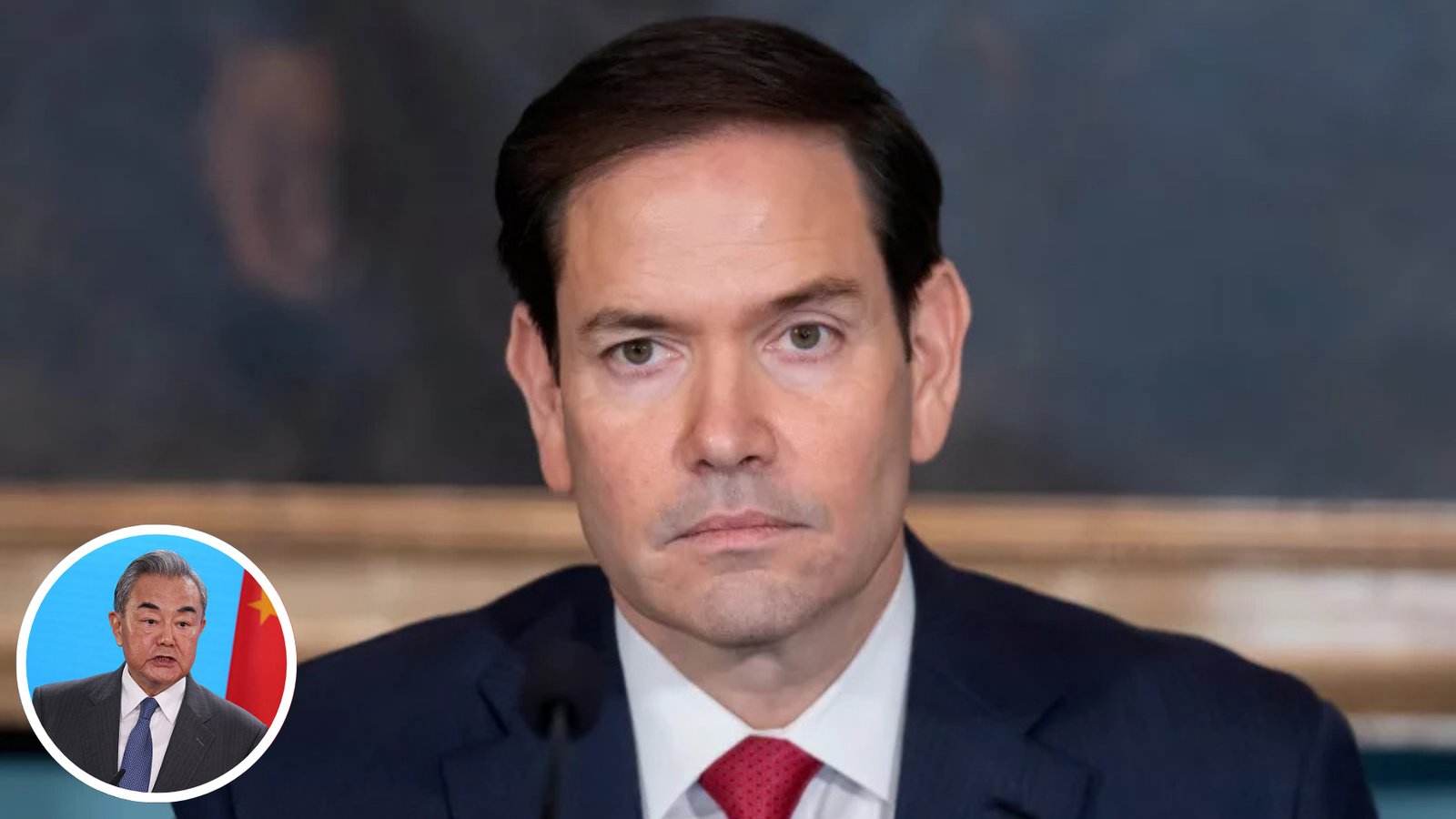

Key Points
- Senator
Marco Rubio met with Chinese Foreign Minister to discuss critical
bilateral and global issues. - The
meeting signals ongoing diplomatic engagement between the United States
and China amid heightened global tensions. - Rubio,
a prominent Republican and China hawk, has been vocal on issues such
as human rights, trade, and national security. - The
Chinese Foreign Minister’s visit is part of a broader diplomatic tour
aimed at stabilizing relations with the U.S. - Both
sides reportedly addressed concerns over trade, technology, human rights,
and regional security. - The
meeting comes as the U.S. and China navigate complex issues including
Taiwan, the South China Sea, and global economic competition. - No
major policy breakthroughs were announced, but both parties emphasized the
importance of dialogue. - The
meeting has drawn attention from international media, reflecting the
significance of U.S.-China relations in global affairs.
In a high-stakes diplomatic encounter, Senator Marco Rubio met with China’s Foreign Minister this week, underscoring the ongoing
efforts to manage the fraught relationship between the United States and China.
The meeting, which took place against a backdrop of global uncertainty and
rising geopolitical tensions, focused on a range of critical issues, including
trade, human rights, and regional security. Both sides reiterated the need for
continued dialogue, even as fundamental disagreements persist.
Why Did Marco Rubio Meet with the Chinese Foreign Minister?
Senator Marco Rubio, known for his tough stance on China,
held talks with the Chinese Foreign Minister as part of a broader effort to
maintain open channels of communication between the two countries. As reported
by Democracy Now!, the meeting is seen as a signal that, despite deep-seated
differences, both Washington and Beijing recognize the necessity of ongoing
engagement to prevent further deterioration in relations.
According to coverage from Democracy Now!, the Chinese
Foreign Minister’s visit to the U.S. is part of a diplomatic tour intended to
stabilize ties and address urgent issues that affect both countries and the
wider world. The meeting with Rubio, a leading Republican voice on foreign
policy, reflects the bipartisan concern in the U.S. over China’s growing global
influence and its domestic policies.
What Issues Were Discussed During the Meeting?
As detailed by Democracy Now!, the discussions between Rubio
and the Chinese Foreign Minister covered a wide array of topics, including:
- Trade
and Economic Relations: Both parties acknowledged the ongoing
trade tensions and the need to find common ground to avoid further
escalation. The U.S. raised concerns about market access, intellectual
property rights, and the impact of Chinese economic policies on American
industries. - Human
Rights: Senator Rubio, who has been outspoken on issues such as
the treatment of Uyghurs in Xinjiang and the crackdown on democracy
activists in Hong Kong, pressed the Chinese delegation on human rights
abuses. The Chinese side reiterated its position that these are internal
matters, but expressed willingness to continue dialogue. - Regional
Security: The situation in the South China Sea, tensions over
Taiwan, and broader Indo-Pacific security were prominent on the agenda.
Both sides recognized the risks of miscalculation and the importance of
maintaining open lines of communication to manage disputes. - Technology
and Cybersecurity: Concerns over technology transfer,
cybersecurity threats, and the global competition for technological
leadership were also discussed, reflecting the growing rivalry between the
two countries in these sectors.
How Has the International Community Reacted to the Meeting?
The meeting has been closely watched by international
observers and media outlets, given its implications for global stability. As
reported by Wikipedia’s July 2025 current events portal, the diplomatic
engagement comes at a time when both the U.S. and China are seeking to manage a
series of crises, from regional conflicts to economic uncertainty.
The New York Times, in its July 8, 2025, print edition, has
highlighted the broader context of U.S.-China relations, noting that such
high-level meetings are essential for preventing misunderstandings and managing
competition between the world’s two largest economies. The Times points
out that, while no major breakthroughs were achieved, the willingness to engage
in frank discussions is a positive sign amid otherwise tense relations.
What Statements Have Been Made by the Participants?
As reported by Democracy Now!, Senator Rubio emphasized the
need for “clear-eyed engagement” with China, stating:
“We must continue to confront the challenges posed by the
Chinese Communist Party, but dialogue remains essential to safeguard American
interests and global stability.”
The Chinese Foreign Minister, according to the same source,
responded by stressing China’s commitment to peaceful development and mutual
respect:
“China seeks cooperation, not confrontation, and is
willing to work with the United States to address shared challenges on the
basis of equality and mutual benefit.”
No joint statement was issued following the meeting, but
both sides described the talks as “candid and constructive,” a diplomatic
phrase often used to signal tough but necessary conversations.
What Are the Broader Implications for U.S.-China Relations?
The meeting between Rubio and the Chinese Foreign Minister
is part of a broader pattern of cautious engagement between Washington and
Beijing. As highlighted by CBS Evening News, such diplomatic contacts are vital
for managing the risks associated with great power competition, especially at a
time when both countries are grappling with domestic and international
pressures.
The Reuters Institute’s 2024 Digital News Report underscores
the importance of accurate and timely reporting on these high-level meetings,
given the prevalence of misinformation and the potential for misinterpretation
of diplomatic signals. Maintaining transparency and open communication is
seen as critical for reducing the risk of conflict and fostering cooperation on
global challenges such as climate change, pandemics, and economic instability.
How Does This Meeting Fit into the Broader Diplomatic
Landscape?
According to Democracy Now! and The New York Times, the
meeting is one of several recent efforts by both countries to stabilize
relations after a period of heightened tensions over issues such as trade,
technology, and regional security. The Chinese Foreign Minister’s visit to
the U.S. follows similar engagements with other Western officials, reflecting
Beijing’s desire to project a more cooperative image on the world stage.
For Senator Rubio, the meeting represents an opportunity to
reinforce U.S. concerns while also demonstrating a willingness to engage
diplomatically. For China, it is a chance to counter accusations of aggression
and present itself as a responsible global actor.
What Comes Next for U.S.-China Relations?
While the meeting did not produce any major policy shifts,
analysts agree that such dialogues are essential for managing the complex and
often contentious relationship between the United States and China. As noted by
Democracy Now!, both sides have signaled their intention to continue talks,
with further meetings expected in the coming months.
Observers will be watching closely to see whether these
engagements lead to tangible progress on key issues or simply serve as a means
of managing tensions without resolving underlying disputes.