
Key Points:
- The
United States is actively supporting the integration of the Kurdish-led
Syrian Democratic Forces (SDF) into Syria’s national institutions, aiming
for a unified Syrian state. - US
Special Envoy Tom Barrack and State Department officials have emphasized
that federalism is not supported and that unity is the only viable path
for Syria. - The
landmark March 2025 agreement between SDF leader Mazloum Abdi and Syrian
interim President Ahmed al-Sharaa, brokered with US backing, is facing
delays and complex negotiations. - The
agreement recognizes Kurds as an integral part of Syria, promises
constitutional rights, and stipulates a nationwide ceasefire and the
return of displaced Syrians. - US
officials have presented the Syrian government with a list of demands in
exchange for partial sanctions relief, including the exclusion of foreign
nationals from top government roles and the destruction of chemical
weapons. - The
Trump administration recently revoked the terrorist designation of Hay’at
Tahrir al-Sham (HTS), the former al-Nusra Front, as part of efforts to
stabilize Syria and encourage normalization with Israel. - The UN
has reported no active ties between the current Syrian leadership and
al-Qaeda, easing concerns over the new government’s composition. - Disagreements
persist between the SDF and Damascus over decentralization, local
autonomy, and the control of oil-rich territories. - The US
is urging international partners to repatriate nationals from
displaced-persons camps in eastern Syria and is reassessing its military
presence in the country. - France
is expected to join the US in overseeing the SDF integration process to
prevent escalation and ensure implementation. - The
future of US military support and funding for the SDF remains uncertain as
the administration signals a gradual withdrawal. - Regional
actors, including Israel and Turkey, are closely monitoring developments,
with concerns over security, border control, and the influence of Kurdish
groups.
The United States is intensifying its efforts to forge a
unified Syrian state by supporting the integration of the Kurdish-led Syrian
Democratic Forces (SDF) into national institutions, a move fraught with
political, ethnic, and security challenges. As negotiations unfold between
Damascus and the SDF, US officials are navigating a complex landscape of
competing interests, regional anxieties, and the legacy of years of conflict.
Why Is the US Pushing for SDF Integration in Syria?
As reported by Seth J. Frantzman of the Jerusalem Post, US
policy under President Donald Trump is unequivocal: “one Syria and one army,”
with no support for federalism or autonomous regions. The US
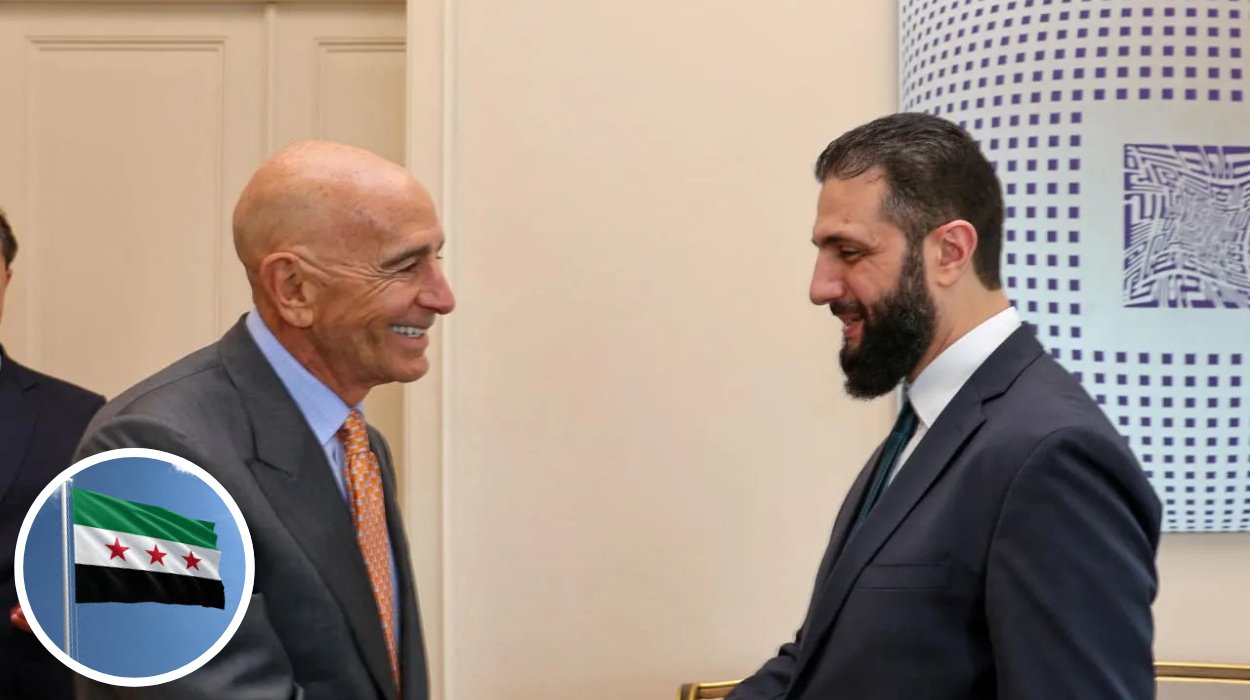
administration has tasked Special Envoy Tom Barrack with the mission of
achieving a stable, unified Syria, including the integration of the SDF into
the country’s military and political framework.
A State Department spokesperson told Rudaw,
“Discussions on
the integration of the SDF into the Syrian government are ongoing and active.
We support the continuation of these discussions as the best way to resolve any
outstanding issues”.
The spokesperson added that the focus remains on
implementing President Trump’s vision for Syria, promoting peace and stability
both domestically and regionally.
What Are the Terms and Challenges of the SDF Integration
Agreement?
According to reporting by Rudaw and Hurriyet Daily News, the
landmark agreement signed on March 10, 2025, by SDF chief Mazloum Abdi and
interim President Ahmed al-Sharaa—brokered with US support—recognizes Kurds as
an integral part of Syria, guarantees constitutional rights, and stipulates a
nationwide ceasefire and the return of displaced persons. The agreement
also calls for the integration of all civil and military institutions in the
northeast, including control over border crossings, oil and gas fields, and
airports.
However, as noted by Hurriyet Daily News, implementation has
been hampered by disagreements over the degree of decentralization and local
autonomy. The SDF, which controls vast oil-rich territories in northern Syria,
has demanded a decentralized system, while Damascus insists on centralized
authority. Sources told Syria TV that the implementation timeline may be
extended and that certain provisions could be amended to address SDF demands.
How Is the US Mediating Between the SDF and Damascus?
As reported by Anadolu Agency, US Special Envoy Tom Barrack
has acknowledged the difficulties in building trust between the parties,
stating,
“There’s not enough specifics in the agreement to have made it work.”
Barrack emphasized that the US is there to “usher” the process, not to
“enforce” it, and that integration will take time due to the lack of trust.
Barrack also highlighted the need for “reasonableness” on
the part of the Syrian government and said,
“The logical thing to do is
incorporate SDF, who are the best of a fighting class.”
He expressed optimism
that:
“The parties would eventually come together and that would be a beautiful
marriage”.
What Are the US Demands for Sanctions Relief and
Normalization?
According to a Reuters report cited by Al Jazeera, the US
has presented the Syrian government with a list of conditions for partial
sanctions relief. These include the destruction of any remaining chemical
weapons, cooperation on counterterrorism, and a ban on foreign nationals
holding top government positions. The US has also called for the exclusion
of foreign fighters from senior roles within Syria’s governance structure.
Syrian officials, including President Ahmed al-Sharaa, have
called for the complete removal of sanctions, arguing that it is unfair to
maintain them after the ousting of Bashar al-Assad. The Trump
administration’s stance remains ambiguous, with divisions within Washington
over how to engage with the new Syrian leadership.
How Has the International Community Responded?
The US decision to revoke the terrorist designation of
Hay’at Tahrir al-Sham (HTS) has been framed as a step toward stabilization and
normalization. As reported by Peoples Dispatch, Secretary of State Marco Rubio
announced the revocation, citing the dissolution of HTS and the new
government’s commitment to combating terrorism. The move is seen as an
incentive for Syria’s interim government to sign a normalization agreement with
Israel.
A UN report cited by the Times of Israel and Reuters found
no active ties between the current Syrian leadership and al-Qaeda, despite
skepticism from Russia and China. This finding bolsters the US bid to lift
sanctions and supports the Trump administration’s vision of a peaceful, unified
Syria.
Diplomats and humanitarian organizations have argued that
lifting sanctions would help rebuild Syria’s economy, reduce authoritarianism,
and limit the appeal of radical groups. President Trump has stated that many
countries, including Israel, requested the lifting of sanctions, though Israeli
Prime Minister Benjamin Netanyahu was reportedly caught off guard by the White House’s decision.
What Is the Future of US Military Presence and International
Oversight?
As reported by Reuters, the US military is poised to
consolidate its presence in Syria, potentially reducing troop numbers by half. Defense
Secretary Hegset is conducting a global assessment of US military deployments,
and US officials have indicated that assistance to displaced-persons camps and
SDF-managed facilities cannot continue indefinitely.
France is expected to join the US in overseeing the SDF
integration process, with sources stressing the need to prevent escalation and
ensure the agreement’s implementation. The Pentagon has allocated $130
million for 2026 under the “Counter-ISIS Train and Equip Fund” for groups in
Syria, including the SDF.
What Are the Main Obstacles to a Unified Syria?
According to an analysis by Al Jazeera’s Osama Bin Javaid,
the integration of the SDF into Syrian state structures faces complex
challenges, particularly along the Turkish frontier and in areas with historic
sectarian divides. The SDF’s decision-making process is influenced by PKK
leadership, which may be reluctant to surrender its semi-independent
administration in Kurdish areas. The broad terms of the agreement and the
long implementation timeline leave room for conflicting interpretations and
potential backtracking.
The Washington Institute for Near East Policy notes that the
SDF has accepted nominal integration but prefers to maintain local command over
Kurdish units, a point of contention that will require further negotiation and
international support.
How Are Regional Actors Reacting to the US Push for Unity?
Turkey remains wary of Kurdish influence in Syria, viewing
the YPG—the main component of the SDF—as a terrorist organization linked to the
PKK. The US has sought to reassure Turkey that it does not support
federalism or Kurdish independence, but tensions persist over border security
and the future of Kurdish-held territories.
Israel and Gulf states are monitoring developments closely,
with some analysts arguing that a stable and unified Syria would serve their
interests by countering Iranian and Russian influence in the region.
What Lies Ahead for Syria’s Path to Unity?
The integration of the SDF into Syria’s national
institutions represents a critical test for the country’s future. As reported by multiple outlets, the process is fraught with uncertainty, but it is widely
seen as essential for lasting peace, economic recovery, and regional stability.
The US, while signaling a gradual reduction of its military
footprint, remains deeply involved in mediating between the parties and shaping
the terms of Syria’s post-war order. The coming months will be pivotal as
executive committees work to implement the agreement and as international
actors weigh their continued support for Syria’s fragile transition.