
Key Points
- Wildfires
have erupted in at least five locations across Turkey’s Aegean coastal
province of İzmir, killing two people and forcing the evacuation of tens
of thousands. - More
than 200 homes have been damaged in Turkey, with strong winds, soaring
temperatures, and low humidity fueling the flames. - Turkey’s
Forestry Minister İbrahim Yumakli confirmed ongoing firefighting efforts,
particularly near Odemis and Buca, with both air and ground support. - A
forestry worker and an 81-year-old resident died in Turkey as a result of
the wildfires. - In
Greece, a major wildfire on Crete prompted the evacuation of over 5,000
people, mostly tourists and hotel workers, as flames threatened resorts
and villages. - The
Greek fire service managed to bring the Crete blaze under control, but
authorities remain on high alert due to strong winds and adverse weather. - Greece’s
meteorological agency issued heat warnings, with temperatures reaching up
to 36°C (97°F), intensifying fire risks. - Public
anger is growing in Turkey over perceived government inaction and lack of
media coverage, with residents using social media to voice frustration. - Officials
in both countries cite climate change and extreme weather as key factors
making wildfires more frequent and severe. - No
fatalities have been reported in Greece, but several elderly individuals
were hospitalized for smoke inhalation, and property damage is significant. - Authorities
in Turkey attribute most fires to power line faults, while the Buca blaze
was reportedly sparked by construction work. - Evacuations
in both countries have been large-scale, with temporary shelters set up
for displaced residents and tourists.
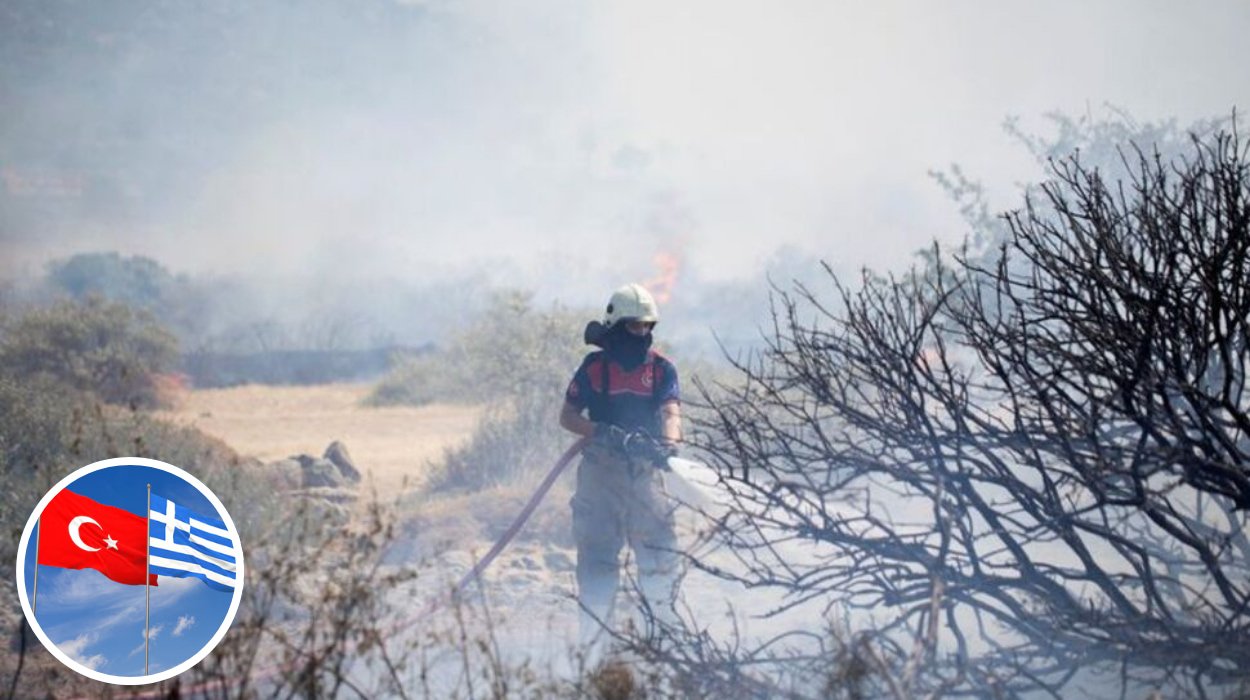
Firefighters in Turkey and Greece are battling a series
of devastating wildfires that have claimed lives, forced mass evacuations, and
destroyed homes and businesses, as both countries face extreme summer heat and
strong winds.
How Did the Wildfires Start and Spread in Turkey?
As reported by the Associated Press for ABC News, wildfires
erupted in at least five locations across Turkey’s Aegean coastal province of
İzmir, driven by soaring temperatures, strong winds, and low humidity. The
most severe fires have been near the town of Odemis and the district of Buca,
where flames have raged for several days. According to Forestry Minister
İbrahim Yumakli, firefighters supported by water-dropping aircraft remain
deployed on the ground, battling to contain the fires for a third day.
What Has Been the Human and Material Toll in Turkey?
The wildfires have killed two people: a forestry worker who
died while attempting to contain the flames and an 81-year-old resident who
succumbed to smoke inhalation, as confirmed by Turkish authorities and reported
by ABC News. More than 200 homes have been damaged, and tens of thousands
of people have been evacuated from threatened areas.
According to Turkish Minute, over 50,000 people have been
evacuated from various neighborhoods in İzmir, Manisa, and Hatay provinces as a
precaution. The fires have burned an estimated 133,500 hectares of land,
with strong winds sometimes grounding firefighting aircraft and complicating
efforts to bring the situation under control.
What Are the Causes of the Turkish Wildfires?
ABC News cites Turkish officials who attribute most fires in
İzmir to faults on power lines, while Forestry Minister Yumakli blamed the Buca
blaze on sparks from construction workers using a grinder to cut metal. No
official estimate of the total land area consumed by the fires has been
provided by Turkish authorities.
How Has the Turkish Public Reacted?
As reported by Turkish Minute, the wildfires have sparked
public outrage, with many residents turning to social media to condemn what
they describe as government inaction and a lack of media attention. Actor
and former parliamentarian Barış Atay criticized the authorities for their
ineffective response, while historian Sema Soykan lamented the country’s
repeated unpreparedness for such disasters. Residents in Hatay, still
recovering from the 2023 earthquakes, expressed despair at facing another
catastrophe so soon.
What Prompted the Mass Evacuations on Crete?
As reported by Niki Kitsantonis of The New York Times,
approximately 1,500 people—mostly tourists—were evacuated from hotels and homes
on the Greek island of Crete on Thursday, as firefighters struggled to contain
a wildfire under challenging conditions. The fire originated near villages
close to Ierapetra, on the island’s southeastern coast, and quickly spread due
to strong winds and high temperatures.
BBC News notes that the fire front expanded to at least 6
kilometers, with thick smoke impairing visibility and ash falling over a wide
area. Authorities closed main roads, advised against non-essential travel,
and placed all hospitals in Crete on high alert due to dangerous air quality
and the risk of respiratory issues.
How Many People Were Evacuated and Where Did They Go?
According to KRWG, more than 5,000 tourists, hotel workers,
and residents were evacuated from the Ierapetra area along Crete’s southern
coast. Some evacuees were relocated to other hotels or spent the night in
an indoor basketball stadium, while others were housed in a town sports
facility. Local fishermen and divers assisted a small number of people who
fled into the sea.
What Was the Scale of the Damage in Crete?
Local authorities estimate that the wildfire burned
approximately 15 square kilometers (3,700 acres) of land. Several homes
and businesses were damaged, and volunteers found dead farm animals, some
burned alive while chained inside sheds. Four elderly individuals were
hospitalized for respiratory issues caused by smoke inhalation, but no
fatalities have been reported in Greece.
What Were the Conditions Facing Firefighters in Greece?
As reported by Reuters, more than 230 firefighters, assisted
by aerial support, battled the flames in the Ierapetra municipality. Their
efforts were hampered by gale-force winds and mountainous terrain, with wind
gusts reaching up to 50 miles per hour creating new hotspots and complicating
containment. Reinforcements arrived by boat and aircraft from Athens to
assist local crews.
How Did Tourists and Locals Experience the Evacuation?
The New York Times quotes Ierapetra Mayor Manolis
Frangoulis, who described the scene as “hell on earth,” with countless fire
spots erupting and blazing pine cones carried by the wind. Kathy Kearns, a
68-year-old visitor from Agios Ioannis, said, “Living in California, I’m
familiar with this situation. The wind can carry embers for miles”. Many
tourists were transferred by bus to safer areas, with the glow of the wildfires
visible in the background.
What Role Did Weather and Climate Change Play?
How Are Extreme Weather and Climate Change Influencing
Wildfires?
Both Turkey and Greece are experiencing a severe heatwave,
with temperatures in Crete forecast to reach up to 36°C (97°F), according to
Greece’s meteorological agency. Authorities in both countries have cited
climate change as a key factor intensifying the frequency and severity of
wildfires, as summers become hotter and drier.
What Warnings and Alerts Were Issued?
The Greek civil protection authority declared an orange
alert, indicating a “very high” fire risk in Athens, the southern Peloponnese,
and various Aegean islands. Shortly after the alert, a blaze ignited in
Rafina near Athens, disrupting ferry services and requiring further evacuations.
How Are Authorities Responding to the Crisis?
What Measures Have Been Taken in Turkey?
Turkish officials continue to deploy firefighters and
water-dropping aircraft to contain the blazes, with ongoing efforts
concentrated near Odemis and Buca. Emergency crews are also working to
halt the spread of new fires, and large-scale evacuations have been implemented
to protect residents.
What Measures Have Been Taken in Greece?
Greek authorities mobilized over 230 firefighters and
multiple aerial units, closed roads, and set up temporary shelters for evacuees. Hospitals
were placed on high alert, and the fire service maintained a large deployment
on Crete to guard against flare-ups due to strong winds.
Are the Fires Under Control?
As of Friday, July 4, 2025, the wildfire in Crete is largely
under control, though authorities remain vigilant for potential flare-ups due
to ongoing adverse weather. In Turkey, efforts to contain the fires
continue, with some blazes still active and the risk of further outbreaks
remaining high.
What Are the Longer-Term Implications?
The current wildfires underscore the growing threat posed by
climate change and extreme weather in the Mediterranean region. Both Turkey and
Greece are likely to face increasing challenges in managing and preventing such
disasters in the future, as summers become hotter and drier, and public
pressure mounts for more effective government action and preparedness.