
Key Points
- House
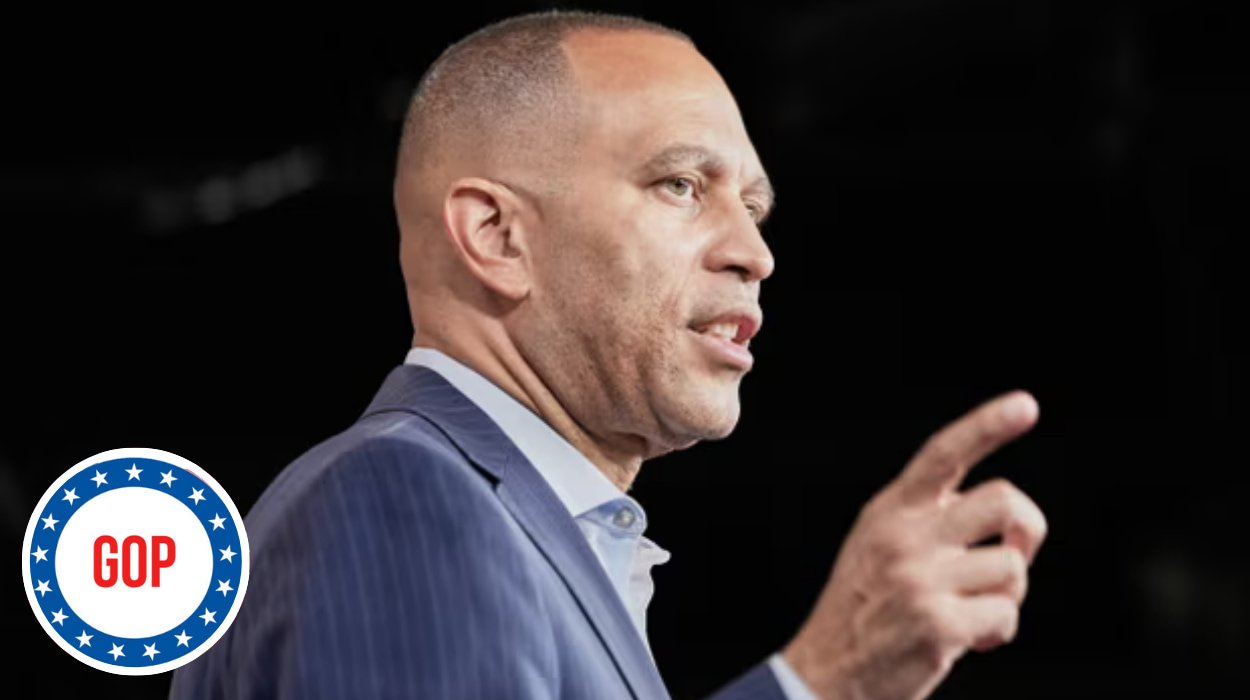
Minority Leader Hakeem Jeffries (D-NY) delivered an 8-hour, 44-minute
speech, setting a new record for the longest House floor speech in U.S.
history. - Jeffries’
marathon address aimed to delay the final vote on the Republican-backed
“Big, Beautiful Bill,” a sweeping tax and spending package endorsed by
President Donald Trump. - The
speech began just before 5 a.m. and concluded shortly after 1:30 p.m.,
with Democrats cheering and chanting Jeffries’ name as he yielded the
floor. - Jeffries
used the “magic minute” rule, which allows party leaders unlimited
speaking time, to highlight the bill’s potential impact on Medicaid, SNAP,
and other social safety net programs. - He
read letters from constituents, criticized the bill’s cuts to healthcare
and nutrition assistance, and accused Republicans of “taking a chainsaw”
to vital programs. - The
previous record was held by then-Minority Leader Kevin McCarthy (R-CA),
who spoke for 8 hours and 32 minutes in 2021. - Jeffries’
speech was widely covered by major media outlets and is seen as a preview
of Democratic messaging ahead of the 2026 midterms. - The
House ultimately passed the GOP bill by a narrow margin, 218-214, along
party lines. - Jeffries
concluded with a call to “press on” for democracy, invoking the legacies
of John Lewis and Martin Luther King Jr..
In a historic display of legislative endurance, House
Minority Leader Hakeem Jeffries shattered the record for the longest House
floor speech, speaking for nearly nine hours in a bid to delay a Republican tax
and spending bill championed by President Donald Trump.
What Prompted Hakeem Jeffries’ Record-Breaking Speech?
As reported by Scott Wong of NBC News, Hakeem Jeffries, a
Democrat from New York, took to the House floor just before 5 a.m. on Thursday,
July 3, 2025, determined to stall the passage of a major Republican bill
aligned with President Trump’s agenda. Jeffries’ speech, which lasted 8
hours and 44 minutes, was not intended to block the bill outright but to delay
its approval and draw attention to its potential consequences.
According to Time’s Eric Cortellessa, Jeffries began his
address by reading letters from constituents in Republican districts who
expressed fear over the bill’s impact on healthcare and social programs. Jeffries
declared:
“People
will die. Tens of thousands, perhaps year after year after year, as a result of
the Republican assault on the healthcare of the American people”
How Did Jeffries Use the “Magic Minute” Rule?
As explained by the Associated Press, House leaders are
permitted unlimited speaking time under the “magic minute” rule, a privilege
Jeffries used to its fullest extent. This allowed him to deliver a speech
that surpassed the previous record set by then-Minority Leader Kevin McCarthy,
who spoke for 8 hours and 32 minutes in 2021.
Jeffries’ speech was punctuated by frequent applause from
Democratic colleagues, who chanted his name as he concluded. Throughout
his address, Jeffries emphasized the bill’s potential to harm Medicaid
recipients, seniors, children, and vulnerable Americans.
What Were the Main Criticisms of the GOP Bill?
As reported by NBC News and Bloomberg, Jeffries repeatedly
criticized the Republican bill for its deep cuts to Medicaid and SNAP benefits,
as well as its elimination of clean energy tax credits. He accused
Republicans of “taking a chainsaw” to essential social safety net programs,
stating,
“Republicans are attempting to use a chainsaw on Social Security, a
chainsaw on Medicare, a chainsaw on Medicaid, a chainsaw on the health care of
the American populace, a chainsaw on nutritional assistance for hungry
children, a chainsaw on rural communities, and a chainsaw on vulnerable
Americans”.
According to the nonpartisan Congressional Budget Office,
the Senate version of the bill could result in nearly 12 million people losing
health coverage over the next decade due to Medicaid reductions. The
legislation also imposes work requirements for able-bodied adults under 65 and
changes how states finance Medicaid.
How Did Jeffries Frame the Debate?
As detailed by The Washington Post’s Paul Kane, Jeffries
framed the debate as a moral struggle, echoing Martin Luther King Jr.’s
assertion that “budgets are moral documents”. “This reckless Republican
budget is an immoral document,” Jeffries said from the podium. “This
legislation will end Medicaid as we know it”.
Jeffries also invoked the legacy of the late Senator John
McCain, urging Republicans to show “John McCain-levels of courage” and vote
against the bill. He challenged his GOP colleagues, saying,
“Every single
one of my House Republican colleagues has opportunity now in this — not
chamber, this chamber to join as Democrats and stand up for what is right. The
eyes of America are watching”.
What Personal Stories Did Jeffries Share?
As reported by Global News and Time, Jeffries read from
binders filled with letters from Americans who rely on Medicaid and other
government programs. He recounted stories of individuals who feared losing
access to healthcare, nutrition assistance, and other vital services if the
bill became law. Jeffries said:
“I’ve been given 15 minutes each on a bill of such
significant magnitude as it relates to the health, the safety and the
well-being of the American people and because that debate was so limited, I
feel the obligation, Mr. Speaker, to stand on this house floor and take my
sweet time to tell the stories and that’s exactly what I intend to do”
How Did Republicans Respond to Jeffries’ Speech?
According to The Washington Post and NBC News, Republicans
largely remained silent during Jeffries’ speech, with only a handful present in
the chamber at various points. Some GOP members, such as Rep. Ralph Norman
(R-SC), had previously expressed opposition to the bill but ultimately voted in
favor after negotiations with party leadership and President Trump.
Jeffries questioned the transparency of these negotiations,
asking,
“Don’t you have some responsibility … to inform the American people
about what transpired? What agreements were made? What occurred behind closed
doors? Yes, it will all come to light. One way or another”.
What Was the Outcome of the Vote?
As reported by The Washington Post, the House passed the GOP
bill by a narrow margin of 218-214, strictly along party lines. Despite
Jeffries’ marathon speech, the legislation advanced, with Republicans
overcoming internal divisions after overnight negotiations with President Trump.
How Did Jeffries Conclude His Speech?
As captured by C-SPAN and ThePrint, Jeffries concluded his
speech with a call to “press on” for democracy, invoking the legacies of civil
rights leaders John Lewis and Martin Luther King Jr., Jeffries declared:
“No matter the
outcome on this single day, we’re going to press on… we’re going to press on
for our children, press on for our seniors, press on for our veterans, press on
for our unions, press on for our farmers, press on for our dreamers, press on
for working class Americans, press on for the middle class, press on for all
who aspire to be part of the middle class, press on for the poor, press on for
the sick, press on for the afflicted, press on for the least, press on for the
lost, press on for the left behind, press on for rule of law, press on for the
American way of life, press on for democracy. We’re going to press on until
victory is won. I yield back,”
What Is the Significance of Jeffries’ Speech?
As noted by Eric Cortellessa of Time, Jeffries’
record-breaking speech is seen as a preview of Democratic messaging ahead of
the 2026 midterms, framing the GOP bill as a betrayal of working-class
Americans. “This is not a ‘Big, Beautiful Bill,’” Jeffries said. “It is
one big, ugly betrayal of working-class Americans”.
Bloomberg’s Erik Wasson reported that Jeffries’ speech
brought national attention to the Democrats’ opposition, dominating morning
news coverage and energizing the party’s base.
How Has the Media Reacted to the Speech?
Major outlets including NBC News, Time, The Washington Post,
Bloomberg, Global News, and C-SPAN provided extensive coverage of Jeffries’
speech, highlighting its historic length, emotional appeals, and potential
political ramifications. The speech has been widely discussed as a
defining moment in the ongoing debate over the future of America’s social
safety net and the direction of the Republican Party under President Trump.