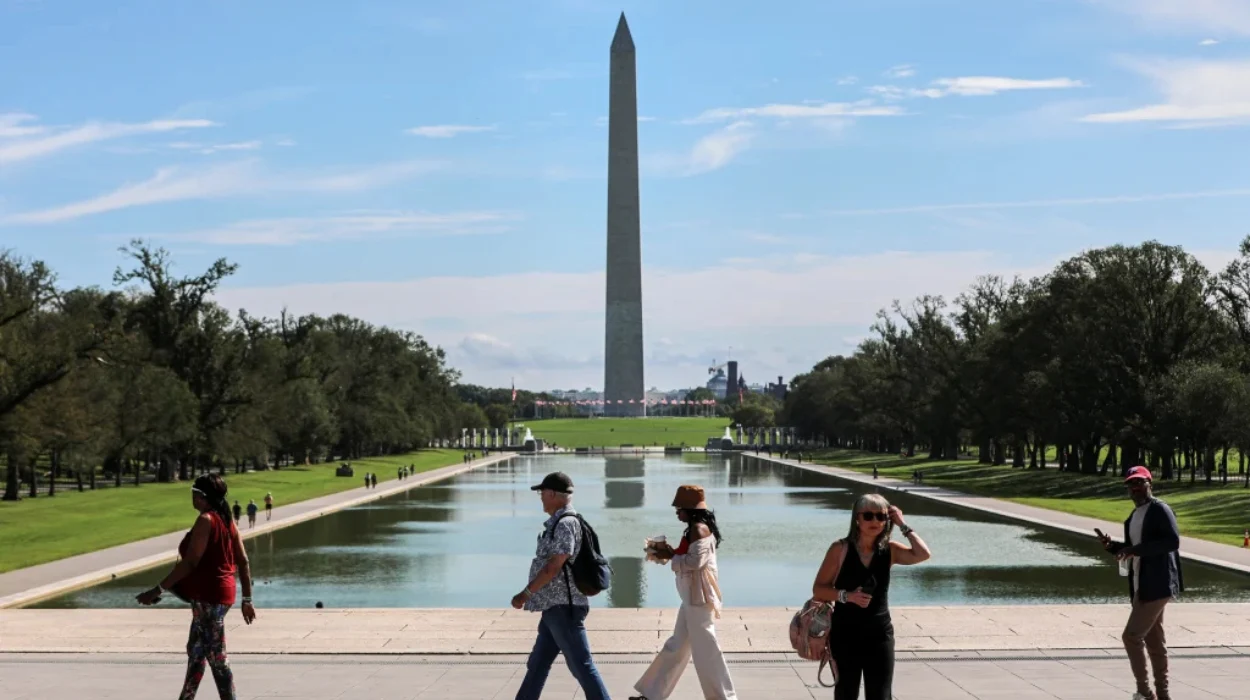

The ongoing government shutdown in the United States has
significant implications for national parks across the country. Historically,
government shutdowns have often resulted in the closure of many national parks
due to lack of staff and resources. However, the current scenario shows a
divergence where national parks, including some of the most iconic such as
Yellowstone, Yosemite, and Grand Canyon, will remain partially open despite the
shutdown, continuing to welcome visitors but with limited staff presence and
services. This article explores the reasons behind this decision, the impact on
park operations, visitor experience, and the broader economic and environmental
consequences.
Government shutdown and its impact on national parks
A government shutdown occurs when Congress fails to pass
adequate funding legislation to keep federal agencies running. This lapse in
funding directly affects departments like the National Park Service (NPS),
which relies on federal budgets to operate facilities, maintain safety and
cleanliness, and protect natural and cultural resources. The shutdown, which
started on October 1, 2025, follows unsuccessful congressional negotiations to
approve a short-term spending measure, marking the third government shutdown in
the last decade driven by political gridlock.
Under previous shutdowns, many parks were shut entirely.
During the last lengthy shutdown in December 2018 to January 2019, parks
remained open
with minimal staffing, leading to widespread damage including vandalism,
overflowing trash, sanitation issues, and harm to sensitive cultural sites.
This precedent raised grave concerns among conservation groups and former NPS
officials about park safety and preservation during the current closure.
Despite these risks, the Trump administration previously
opted to keep national parks open with skeleton crews, a policy that has been
reiterated in a similar spirit under the current administration. This strategy
aims at allowing public access while balancing limited workforce availability.
However, the National Parks Conservation Association (NPCA) and other advocates
warn this approach leaves parks vulnerable to harm and neglect, urging
officials to consider closures where staffing is insufficient to maintain
safety and security.
Partial park operations amid staffing challenges
With thousands of park employees furloughed and no final
contingency plan announced, national parks face significant operational
downsizing. Parks like Yellowstone, Yosemite, Grand Canyon, Zion, Acadia, and
Rocky Mountain National Parks are expected to remain accessible, but visitor
services such as guided tours, educational programs, visitor centers, and
routine maintenance are curtailed or suspended. Entrances with gates or doors
may be locked to restrict access where staff presence cannot be guaranteed.
This partial availability means that while visitors can
enter many parks, they will find reduced or no ranger assistance, limited law
enforcement, and diminished upkeep. This scenario raises safety concerns over
overcrowding, increased wildlife encounters, and potential environmental
degradation due to unsupervised human activity. Reports from the 2018 shutdown
showed that the absence of staff resulted in increased litter, vandalism, and
damage to park infrastructure, challenges that once incurred can take months or
years to repair.
Economic and community impact
National parks are major economic drivers for surrounding
gateway communities, contributing billions annually through tourism spending on
lodging, dining, transportation, and retail. The current shutdown threatens not
only park preservation but also local economies that rely heavily on visitor
revenues. The NPCA estimates losses of up to $1 million daily in park fee revenues
and up to $80 million in visitor spending lost to neighboring communities for
every day the shutdown persists.
The decreased visitation services and uncertainties also
impact long-term tourism appeal and employment stability within these
communities. Furthermore, parks themselves suffer financial setbacks as healing
from environmental damage and infrastructure neglect costs substantial funds,
often beyond what fee revenues alone can cover, further straining NPS budgets
during and after shutdown periods.
Why did the US government shutdown occur?
The government shutdown in 2025 stemmed from Congress and
the executive branch not being able to come to an agreement on appropriations
for the federal budget. Much of the underlying political conflict revolved around
spending levels, funding for border security and a myriad of other legislative
priorities with the resulting outcome being a failure to authorize the spending
of any funds for the federal government. Unlike prior temporary government
shutdowns where the interruption of activities lasted for a few days, this
current political deadlock greatly threatens the continuity of operations for
an indefinite period of time across the range of federal services, including
the National Park Service.
Political variables have been known to influence the length
of government shutdowns historically, and in many prior examples, both involved
complex negotiations with deep ideological divides over policy issues of high
priority.
A balancing act
The partial reopening of national parks during the 2025 U.S.
government shutdown raises the issue around a complicated and precarious
balance. There is both a desire to allow access to some of the most beloved
natural scenery and cultural sites in the country, but the limited resources
meant to conserve and recover federal funds while the majority of the workforce
was furloughed, create areas of uncertainty for visitor safety, environmental
protection efforts and where communities economically rely on national park
visitation, well, to go south. In this layered scenario, operational
constraints and ongoing political deadlocks are punctuated by the vulnerability
of public assets, while revealing the broader need for ongoing sustainable
funding for our national parks.
Government shutdowns occur when federal appropriations
lapse, most recently occurring in October 2025 due to Congress’s inability to
agree on spending priorities, including border security, and resources devoted
to investments in domestic priorities. Agencies such as the National Park
Service (NPS) that rely on federal appropriations will engage in immediate
furloughing of its employees, with approximately two-thirds of the NPS’s
approximately 14,500 employees to be placed in a leave without pay status. Only
a skeleton crew of staff will continue with the agency’s mission, engaging in
activities for visitor and employee health, safety, law enforcement, fire
suppression, and emergency response.
Despite this, several parks across the United States,
including marquee parks such as Yellowstone, Yosemite, Grand Canyon, Zion,
Acadia, and Rocky Mountain National Parks, can be partially open. Partially
open parks draw upon the Department of the Interior’s contingency plans. Such
plans detailed the implementation of outdoor facilities (e.g., trails, roads,
lookouts, open-air memorials). Maintenance of basic visitor services, such as
restroom operations/cleaning, trash collection/cleaning, campgrounds, and basic
road maintenance, are conducted using minimally compensated staff, which
includes parks gathering fees from visitors via the Federal Lands Recreation
Enhancement Act, which not all park staff, amenities, and operations result in
collecting fee revenue. Fees are used to pay for core visitor services with
fewer staff. However, without complete staff, a variety of visitor experience
and safety issues continue to occur.
The partial functioning of national parks during shutdowns
exerts considerable pressure on park infrastructure and natural resources. The
potential of accidents involving visitors, animal-human conflicts, and other
disturbances to special ecosystems increases with the ranger presence reduced.
After prior longer shutdowns, such as the 35-days shutdown that occurred from
late December 2018 – January 2019, unattended cultural and natural national
park areas had issues such as overflowing trash in and around visitor center
areas, acts of vandalism to cultural and natural resource areas including rare
trees, and sanitation facilities that were not serviced. Repairs and
restorations of cultural and natural resource damages often took months to
address and resulted in both long-term impacts to park resources and vision of
visitor services.
Additionally to environmental impacts, there are economic
impacts felt in gateway communities that significantly depend on national park
tourism. Visitor spending which supports local jobs and businesses (hotels,
restaurants, shops and tour companies) disappears or diminishes as services and
facilities within the park shut down, become unstaffed, or deemed too much
uncertainty to proceed to visiting a park. The National Parks Conservation
Association estimates up to $1 million in direct park fee losses and another up
to $80 million in lost revenue and local spending for each day of the shutdown.
Economic interruptions further worsen impacts for small towns and rural
communities particularly dependent on consistent visitation influences
throughout the year and especially during peak visitation periods.
Stalemates that prevent Congress from creating a budget lead
to governmental shutdowns that are also indicative of deeper systemic issues
surrounding our public land management and funding. The routine occurrence of
budgetary crises and associated uproar at federally managed sites demonstrates
the ways in which national parks as public good are susceptible to external
policy decisions. Although parks provide vital cultural, ecological, and
economic significance in communities across the country, their management
relies heavily upon policy compromise, which is often not agreement-free or
timely. Another government shutdown highlights a desire for Congress and
the executive branch to devise a funding approach that is more predictable and
insulated from the politics milieu that now threatens our national heritage and
public lands while also effectively protecting community needs and ecological
health.
The approach to the 2025 US government shutdown meant
keeping national parks partially open verges on being a careful balancing act
of continued public access versus protecting our national parks with limited
people resources. Visitors are still able to enjoy many of this country’s
greatest natural wonders; however, responsible, healthy, and effective visitor
services, safety, and park conservation is impaired due to reduced staffing.
Meanwhile, national parks struggle to meet capacity demands (strain) relative
to park infrastructure and nearby economies while unable to adapt to unstable
federal funding resulting from partisan gridlock. This scenario highlights the
need to reconsider budgetary stability to ensure national parks retain their
amazing value to current and future generations.