
Key Points
- Defense
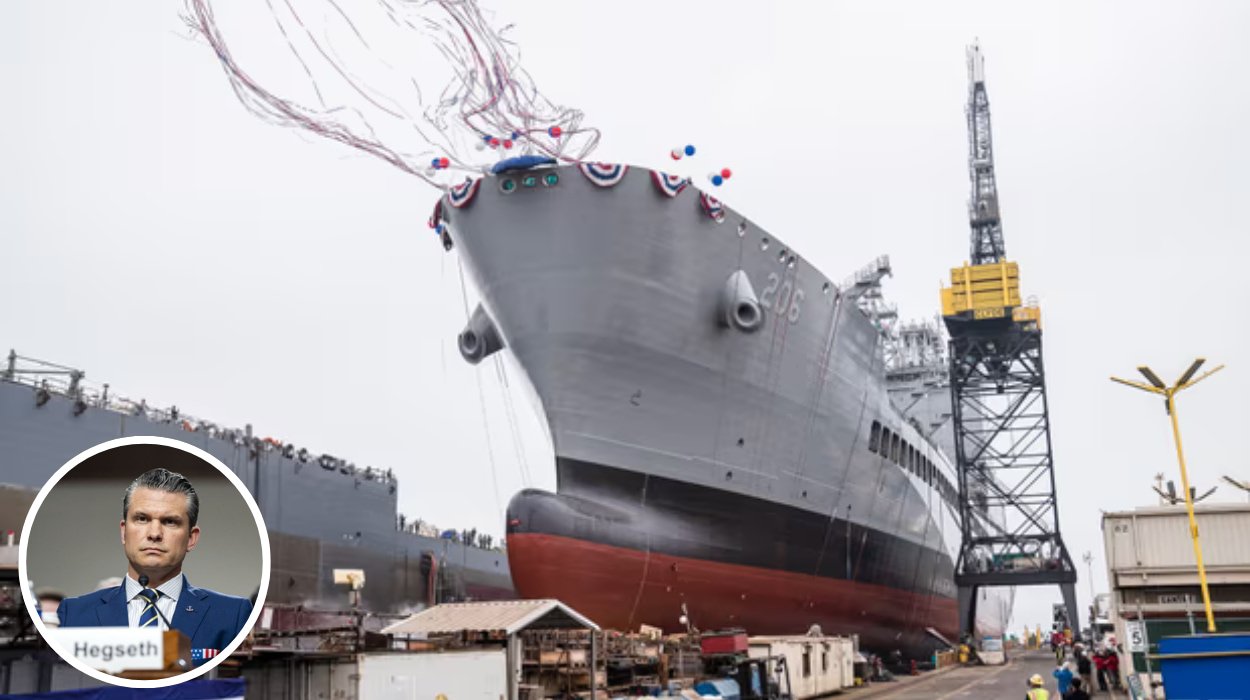
Secretary Pete Hegseth announced the USNS Harvey Milk will be renamed the
USNS Oscar V. Peterson, honoring a World War II Medal of Honor recipient. - Hegseth
stated the move is to “take the politics out of ship naming,” criticizing
the previous administration’s focus on activists and diversity. - The
renaming comes during Pride Month and amid broader efforts by the Trump
administration to remove diversity, equity, and inclusion (DEI)
initiatives from the military. - Lawmakers
and LGBTQ+ advocates condemned the decision, calling it discriminatory and
an erasure of Harvey Milk’s civil rights legacy. - The
ship was originally named after Harvey Milk, the slain gay rights activist
and Navy veteran, by Obama-era Navy Secretary Ray Mabus in 2016. - Oscar
V. Peterson was honored for his heroism during the Battle of the Coral
Sea, where he saved his ship and crewmates at the cost of his own life. - The
announcement has fueled national debate over military naming conventions
and the role of representation in the armed forces.
In a move that has ignited fierce debate over military
tradition, civil rights, and political symbolism, Defense Secretary Pete Hegseth announced Friday that the USNS Harvey Milk will be renamed the USNS
Oscar V. Peterson. The decision, made public in a video posted to social media,
comes amid ongoing efforts by the Trump administration to eliminate references
to diversity and inclusion across the Department of Defense.
Why Did Pete Hegseth Announce the Renaming of the USNS
Harvey Milk?
As reported by Michael D. Shear of The New York Times,
Defense Secretary Pete Hegseth said the decision to rename the ship was about
“taking the politics out of ship naming.” Hegseth stated,
“We’re not renaming
the ship to anything political. This is not about political activists, unlike
the previous administration. Instead, we’re renaming the ship after a United
States Navy Congressional Medal of Honor recipient, as it should be”.
The announcement was made during Pride Month, a period when
the Pentagon under the Biden administration had previously highlighted LGBTQ+
service members and their contributions to the military. Hegseth’s move is seen
as part of a broader campaign to “re-establish the warrior culture” and remove
what he and President Trump have called “political activism” from military
traditions and honors.
Who Was Harvey Milk and Why Was the Ship Originally Named
After Him?
The USNS Harvey Milk was named in 2016 by then-Navy
Secretary Ray Mabus, under President Obama, as part of a series of ships
honoring civil and human rights icons. Harvey Milk, a former Navy officer,
became the first openly gay elected official in California before his
assassination in 1978. His name on the ship was intended to recognize both his
military service and his pioneering role in the fight for LGBTQ+ rights.
As reported by The Independent, the ship’s naming was
seen as a milestone for LGBTQ+ representation in the armed forces and a symbol
of progress for inclusion and diversity.
Who Is Oscar V. Peterson and Why Was He Chosen?
Oscar V. Peterson was a Chief Petty Officer in the U.S. Navy
who received the Medal of Honor posthumously for his actions during the Battle
of the Coral Sea in 1942. According to the Navy Times, Peterson saved
his ship and crewmates by closing bulkhead stop valves after the vessel was
bombed, despite suffering fatal injuries. Hegseth praised Peterson’s “spirit of
self-sacrifice and concern for his crewmates,” calling it “in keeping with the
finest traditions of the Navy”.
How Have Lawmakers and Advocacy Groups Responded?
As reported by The Economic Times and PBS NewsHour,
the decision has drawn sharp criticism from Democratic lawmakers and LGBTQ+
advocacy groups. Senate Majority Leader Chuck Schumer called the move “blatant
discrimination,” while former House Speaker Nancy Pelosi described it as “a
shameful erasure” of Milk’s civil rights legacy. Advocates argue that the
decision undermines efforts to recognize the contributions of LGBTQ+ Americans
to the military and the nation.
Conversely, some veterans’ groups and supporters of the move
argue that honoring Medal of Honor recipients like Peterson is a return to
traditional military values and a focus on heroism rather than activism.
What Has the Pentagon and Navy Said?
The Pentagon has not issued a statement beyond Hegseth’s
video announcement. Navy Secretary John Phelan was reportedly ordered earlier
this month to form a team to rename the vessel, according to The Independent.
The ship’s original naming and subsequent renaming have both been highly
politicized, reflecting broader national debates over military honors and
representation.
How Does This Fit Into the Trump Administration’s Approach
to Military Culture?
According to PBS NewsHour and NPR, the
renaming is part of a series of actions by the Trump administration and Hegseth
to remove DEI (diversity, equity, and inclusion) programs and references from
the military. In February, Hegseth directed the services to identify $50
billion in programs to cut, aligning with President Trump’s objectives to
“re-establish the warrior culture”.
The move also follows previous efforts to rename military
bases and ships named after figures associated with civil rights, women, and
minorities, many of which were introduced by the Biden administration.
What Happens Next for the USNS Oscar V. Peterson?
The USNS Harvey Milk will now officially bear the name of
Oscar V. Peterson, with the change already reflected in Navy communications.
The debate over the ship’s name is expected to continue, with advocacy groups
and lawmakers promising to challenge the decision and highlight its
implications for LGBTQ+ recognition in the military.
What Is the Historical Significance of This Naming
Controversy?
As reported by The Maritime Executive, ship namings
are deeply symbolic and reflect the values and priorities of the nation at the
time. The controversy over the USNS Harvey Milk’s renaming underscores ongoing
tensions between honoring military heroism and recognizing the contributions of
historically marginalized groups. Hegseth
said in his social media statement.
“We are taking the politics out of ship naming, People want to be proud of the ship
they’re sailing in”.
The story remains a flashpoint in the broader conversation
about how America remembers its heroes and whose stories are honored in public
life.