
Key Points
- The
U.S. House of Representatives has officially banned WhatsApp on all
government-issued devices, citing security and data protection concerns. - The
decision was communicated via a memo from House Chief Administrative
Officer (CAO) Catherine Szpindor on June 23, 2025. - The
Office of Cybersecurity labeled WhatsApp a “high-risk
application” due to lack of transparency, absence of stored data
encryption, and potential security threats. - Staff
must remove WhatsApp from all House devices, including mobile, desktop,
and web versions. - Acceptable
alternatives recommended include Microsoft Teams, Amazon Wickr, Signal,
iMessage, and FaceTime. - Meta,
WhatsApp’s parent company, strongly disagreed with the ban, arguing that
WhatsApp offers default end-to-end encryption and a higher level of
security than most approved alternatives. - The
ban follows recent scrutiny over government officials’ use of insecure
platforms for sensitive communications and previous bans on apps like
TikTok, ChatGPT, and DeepSeek. - The
move comes amid heightened cybersecurity concerns, including recent
spyware attacks targeting WhatsApp users, such as journalists and civil
society members. - The
ban applies only to official devices; personal use of WhatsApp by staff is
not affected. - The
Senate has not announced a similar ban as of this report.
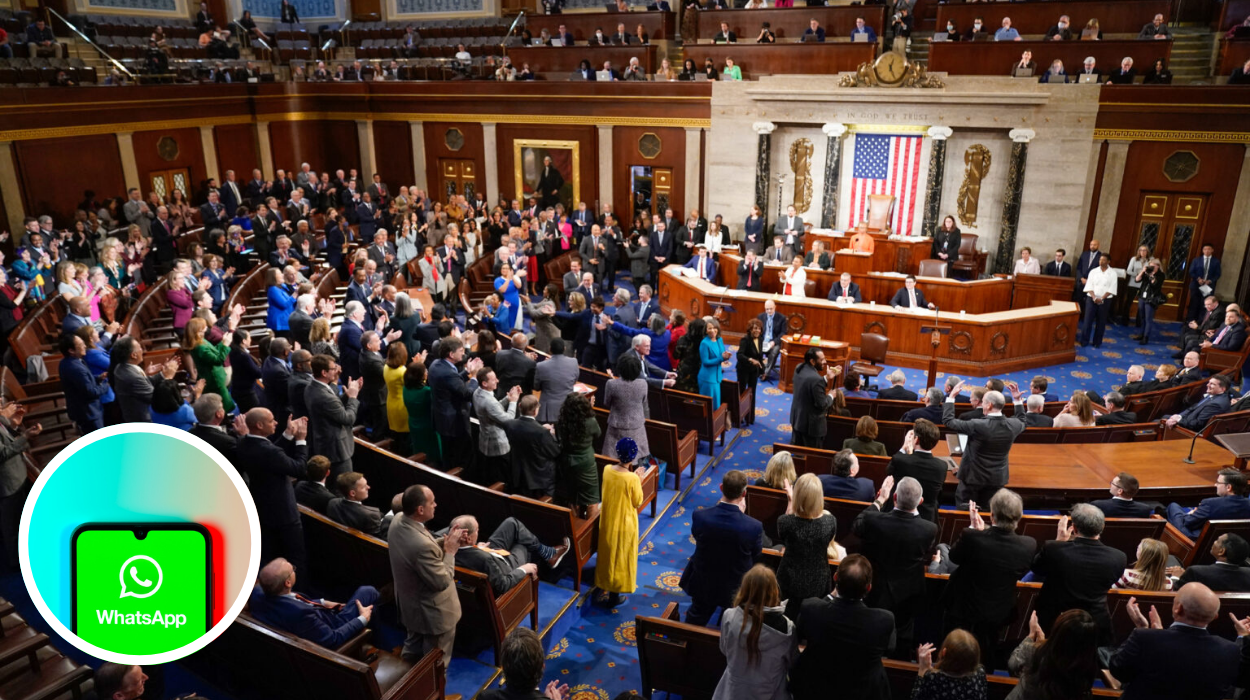
In a decisive move reflecting growing concerns over digital
security, the U.S. House of Representatives has banned WhatsApp from all
government-issued devices, citing significant risks related to data protection
and transparency. The ban, effective immediately, underscores a broader shift
in Washington’s approach to technology and the safeguarding of sensitive
government communications.
Why Did the U.S. House Ban WhatsApp on Official Devices?
As reported by The Hacker News, the U.S. House of Representatives formally prohibited congressional staff from using WhatsApp on
any government-issued device following a memo from the Chief Administrative
Officer (CAO). The Office of Cybersecurity, in its assessment, deemed WhatsApp
a “high-risk to users due to the lack of transparency in how it protects
user data, absence of stored data encryption, and potential security risks
involved with its use,” according to the memo first reported by Axios and
cited by multiple outlets.
Catherine Szpindor, the House’s CAO, reiterated in a
statement to CNBC that “protecting the People’s House is our topmost
priority,” emphasizing that the ban was enacted after “monitoring and
analyzing for potential cybersecurity risks that could endanger the data of
House Members and staff”.
What Are the Security Concerns Highlighted by the House?
According to Reuters, the official memo specified three main
concerns: lack of transparency regarding data protection, the absence of
encryption for stored data, and the potential for security threats associated
with WhatsApp’s use. The CAO’s directive mandates that staff “are NOT
allowed to download or keep the WhatsApp application on any House device,
including any mobile, desktop, or web browser versions of its products,”
as reported by Entrepreneur.
The Street’s coverage contextualizes the ban within a
broader pattern of lapses in secure communication among top officials,
referencing a recent incident where high-level government leaders inadvertently
shared sensitive information over insecure platforms. While those involved
denied wrongdoing, the event heightened awareness about the risks associated
with using consumer-grade messaging apps for official business.
How Has Meta Responded to the Ban?
Meta, the parent company of WhatsApp, has strongly pushed
back against the House’s characterization of the app. As reported by The Hacker
News, Meta’s Communications Director Andy Stone stated on X (formerly Twitter):
“We disagree with the House Chief Administrative Officer’s
characterization in the strongest possible terms”.
Stone further argued,
“Messages on WhatsApp are end-to-end encrypted by default, meaning only
the recipients and not even WhatsApp can see them. This is a higher level of
security than most of the apps on the CAO’s approved list that do not offer
that protection”.
Meta’s spokesperson reiterated to Reuters that WhatsApp
provides a higher degree of security compared to the other approved messaging
applications. The company maintains that its end-to-end encryption is
industry-leading and that the ban misunderstands the app’s protections.
What Alternatives Has the House Recommended?
The CAO’s memo, as cited by The Hacker News and
Entrepreneur, recommended several alternative messaging platforms deemed more
secure for official use: Microsoft Teams, Amazon’s Wickr, Signal, Apple’s
iMessage, and FaceTime. Staff are being directed to transition to these
platforms, which are believed to offer better monitoring and data protection
capabilities for government use.
Has WhatsApp Been Linked to Recent Security Incidents?
Reporting by Reuters and Outlook Business highlights that
earlier this year, Meta disclosed a hacking campaign targeting around 90
WhatsApp users, including journalists and civil society representatives. The
attack was attributed to Paragon Solutions, an Israeli spyware company, raising
alarms about the app’s vulnerability to sophisticated cyber threats. While this
incident did not involve government devices, it contributed to the growing
unease among lawmakers about the risks of using WhatsApp for official
communications.
Is This Part of a Broader Trend in Congressional Tech
Policy?
As noted by The Street and Entrepreneur, the WhatsApp ban is
the latest in a series of technology restrictions imposed by the House.
Previous bans have targeted TikTok (in 2022), OpenAI’s ChatGPT, DeepSeek, and
even Microsoft Copilot in some contexts. These moves reflect an increasingly
cautious approach as US Congress seeks to regain control over its digital
environment amid rising cybersecurity threats and public scrutiny.
How Are Staff Reacting to the Ban?
For many congressional staffers, the ban on WhatsApp
represents a significant disruption. The Street reports that WhatsApp had
become the default tool for everything from media coordination to cross-party
scheduling, valued for its ease of use and speed. The sudden shift to
alternative platforms has resulted in “awkward transitions, broken group
chats, and presumably lots of ‘What’s your new number?’ messages flying around
Capitol Hill,” according to The Street’s analysis.
Does the Ban Affect Personal Devices or the Senate?
Importantly, the ban applies only to government-issued
devices. Staffers are still permitted to use WhatsApp on their personal phones,
and there is currently no indication that the Senate will implement a similar
ban. The House’s action, however, signals a growing mistrust of Big Tech
platforms in the federal government and may foreshadow further restrictions.
What Does This Mean for Meta and the Future of Messaging
Apps in Government?
The ban is another blow to Meta’s already strained
relationship with Washington. The Street observes that while the average user
may not be directly affected, the move “could be a sign that government
trust in Big Tech continues to erode”. As cybersecurity threats mount and
public scrutiny intensifies, federal security teams are opting for proactive
measures, even if it means removing one of the world’s most popular apps from
official use.
In summary, the U.S. House’s WhatsApp ban marks a
significant escalation in the government’s efforts to secure its digital
communications, reflecting both specific concerns about the app’s security and
a broader skepticism toward Big Tech’s role in official government operations.